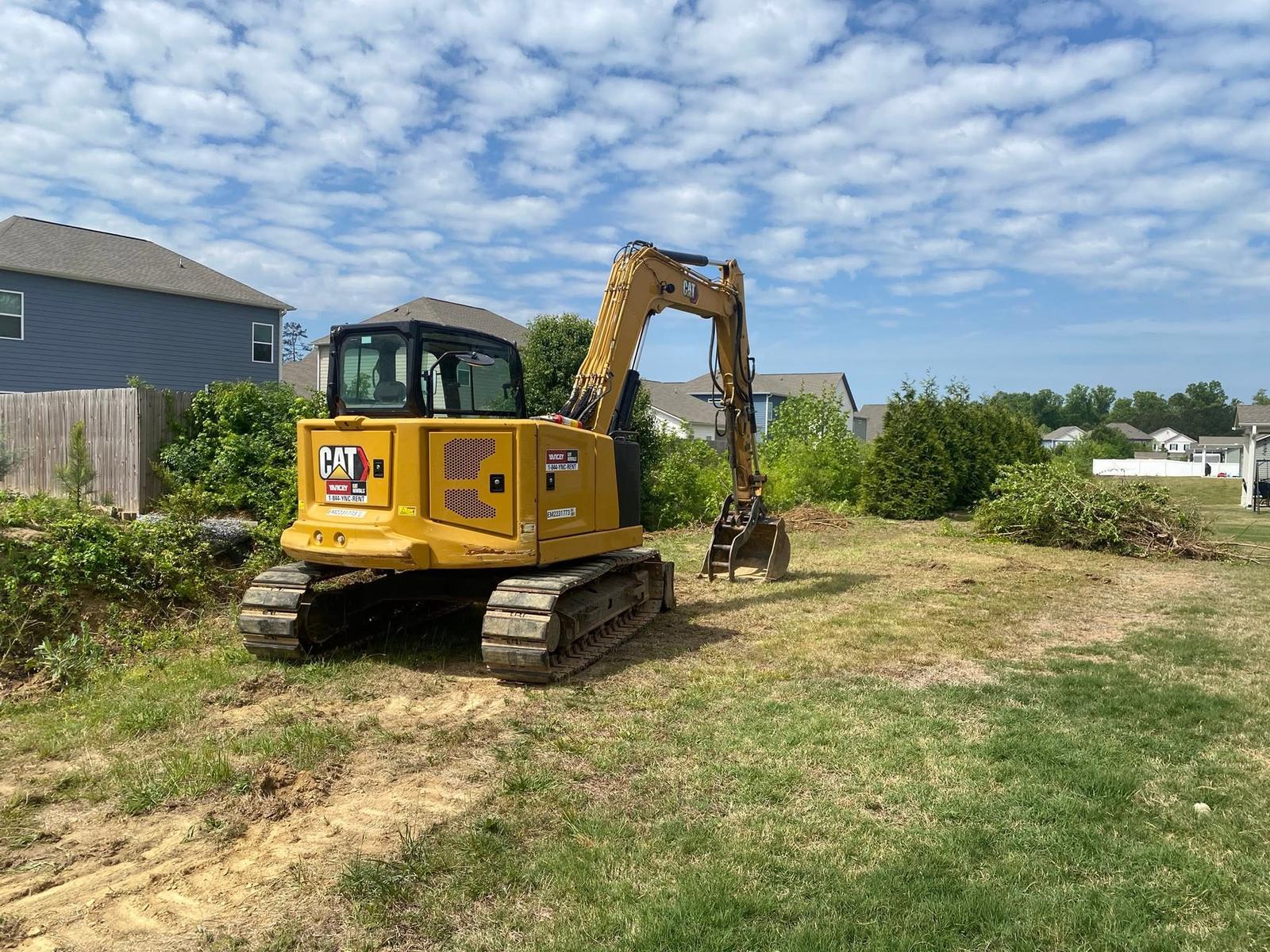
Aragon is one square mile of Polk County with 1,440 people and 566 houses on it. The street plan tells you most of what you need to know about the property here. West First, West Second, and West Third cross Oak, Elm, Walnut, and Spring, and the lots that hang off them are short and close together. Georgia 101 runs through as the only state route inside the limits, a Norfolk Southern line clips the town, and Euharlee Creek comes through carrying its own set of problems. Legacy Land Care works Aragon out of Rome, about 18 miles northwest. Veteran owned. John Mulkey does the operating and the estimating both.
A Square Mile Laid Out Flat
Most of Aragon sits in a band between about 700 and 765 feet, with one rise carrying the north end up toward 850. Take out that rise and the town is nearly level. Level is comfortable to live on and awkward to drain, because a lot with no fall has nowhere to send water except into whatever sits lowest, and on a grid of small lots the next lowest thing is frequently a neighbor.
That single fact sets the order of work on a town lot here. Find the fall before moving dirt, not after. On a quarter acre there may be six inches of it between the back fence and the street, and six inches is enough if it runs the whole way and reaches an outlet. It is worth nothing at all if it stops halfway. Cutting a shallow swale along a side yard, or running a buried line out to where the ground finally drops, is ordinary drainage and water control, and here it has to precede yard leveling instead of following it. Level a wet yard first and you have built a flat pan that holds water evenly instead of in one corner.
Decatur on the Streets, Chewacla on the Bottom
Two soils do most of the work of explaining Aragon. On the built up side of town the survey maps Decatur loam across the 2 to 6 percent slope class, deep red soil weathered off limestone, well drained, and about as sound as dirt gets around here for a pad or a drive. Etowah loam shows up beside it on the same gentle slopes. Toward Euharlee Creek the survey switches to Chewacla silt loam, nearly level, somewhat poorly drained, classed as frequently flooded, and it takes in a large share of the low ground inside the limits.
Frequently flooded is not a warning label somebody added. It is a soil survey classification and it describes what the creek has been doing to that ground for a long time. Chewacla is also split rated for runoff, meaning it behaves like decent soil when the water table is down and like the worst class there is when the water table is up. Same yard, two different personalities, six months apart. Anybody spending money on a low corner in Aragon ought to know which one they are dealing with before the check is written.
Out on the edges the map gets rougher. There is Hector stony fine sandy loam on 15 to 40 percent slopes, where bedrock sits about fifteen inches under the surface, and Cunningham loam, which is well drained but still rated in the highest runoff group the survey has. Neither of those is town lot ground. Both of them turn up on the acreage just past the last street.
Small Lots, Short Drives, Close Neighbors
Work on a village lot is a different trade than work on acreage, and Aragon is mostly village lot. Most drives in town measure out in feet rather than in tenths of a mile. Nothing runs long enough to crown and there is no room for a turnout, so a drive that fails here does not wash away. It sinks. Rock set directly on soft ground works downward with every load until stone and dirt are indistinguishable and the whole run has gone spongy. Topping it off again resets the clock for a few months and nothing more. Depth is what holds: excavating far enough to build a real base, holding the stone clear of the soil beneath it, and pitching the surface so water has somewhere to go. That is driveway and access work sized for a town lot.
Clearing is close quarters too. Growth comes out by mulching in place rather than pushing a pile toward somebody's fence, and what cannot be mulched gets hauled. Land clearing on a lot this size is planned around the gate, the meter, the septic field, and the neighbor, and it gets priced that way. Where an old shed, slab, or foundation stands in the way, demolition and haul off clears it, and the dirt underneath deserves a look once it sees daylight, because it is frequently fill that nobody wrote down.
Past the Last Street
Aragon runs out quickly. Outside the grid the property gets larger and the ground gets less forgiving, up Taylorsville Road, New Prospect Road, Hicksville Road, Portland Road, and Creek Bank Road. That is where the steep stony soil and the flood bottom both live, sometimes on the same tract.
Those places want different tools. On slope, forestry mulching grinds growth where it stands and leaves the cover holding the hill. On open pasture edges, fence line clearing and bush hogging keep a boundary from turning back into woods. Where a homesite or a barn is going in, grading and site prep puts the pad up out of the wet and sends fall away from it before the first truck of concrete shows up.
Soft yard, sinking drive, lot grown up past mowing, old building in the way? John takes calls and texts at (706) 936-4615. The quote form works too. Either way he comes and stands on the property before a number gets said.