Yard Leveling
Yard Leveling and Regrading
Bumpy, rutted, or holding water? We cut the highs, fill the lows, and set fall away from the house so the yard drains and mows clean.
What this looks like on your land
A yard that is rutted, humped, or holding water in the same spot after every rain has a grade problem, not a mowing problem. Yard leveling fixes the shape of the ground: high spots cut down, low spots filled and compacted, and fall set so water runs away from the house instead of toward it. The last pass is topsoil and a finish grade you can seed or sod.
What's included
- High spots and humps cut down so the mower stops scalping
- Low spots and holes filled where water stands after a rain
- Positive fall established away from the foundation, porch, and crawl space
- Old fill, buried stump holes, and soft ground dug out and rebuilt
- Fill dirt hauled in, spread, and compacted in lifts
- Topsoil placed over the corrected grade
- Ruts and equipment tracks smoothed back out
- Finish grading raked out and ready for seed or sod
Why a Yard Goes Uneven
A yard rarely goes out of shape for one reason. Old fill placed when the house was built and never compacted keeps giving up ground under its own weight. A stump that was ground off at the surface instead of dug out leaves a hole once the chips and roots rot away. A trench cut for water, sewer, or a gas line drops a little every year. Truck and trailer ruts dry hard and stay.
The result reads the same from the seat of a mower. Water sits in the low spots instead of moving off, the deck scalps the high ones, and the yard gets harder to walk, mow, or use for anything. Leveling corrects the shape of the ground so those problems stop repeating every season.
Cut the Highs, Fill the Lows, Compact the Fill
Leveling a yard is cut and fill at a small scale. We strip the high spots down, move that material into the lows, and bring in fill dirt when the yard does not have enough of its own to work with. Fill goes in and gets compacted in lifts instead of dropped in one deep pile, because loose fill in a low spot settles right back into a low spot.
Where the ground is soft over an old stump hole or a pocket of buried debris, capping it with topsoil only delays the problem. That material comes out first and the hole gets rebuilt with fill that will hold weight. Topsoil goes on last, over ground that is already sitting at the grade you want.
Fall Away From the House Matters More Than Topsoil Depth
Northwest Georgia sits on red clay that sheds water instead of absorbing it. A hard rain does not soak in, it runs, and where it runs is decided by the shape of the ground and nothing else. That is why a low spot here stays wet for days after the rest of the yard has dried out.
So the first thing we set on a leveling job is fall away from the house. The ground next to a foundation, a porch slab, or a crawl space vent needs to drop away from it, and it needs to keep dropping far enough out that the water has somewhere to go. Adding topsoil to a yard that falls the wrong way raises the whole problem a few inches and leaves it exactly where it was.
Leveling, Site Prep, and Drainage Are Three Different Jobs
Yard leveling is finish work on ground you already live on. It is smoothing, filling, and setting fall across a lawn so it mows clean and drains, usually measured in inches of material rather than feet.
Grading and site prep is the builder side of dirt work: cutting a pad for a house, shop, or barn, bringing raw ground to working elevation, and compacting a surface that has to carry a slab or a driveway. Different target, different tolerances, and it is its own service.
Drainage and water control is what a property needs when shaping the surface is not enough by itself. French drains for water moving underground, culverts where a drive crosses water, and erosion repair on a slope are separate work. Some yards need leveling and nothing else. Others need leveling plus a drain to carry the water the last stretch off the property. We walk it first and tell you straight which one you are looking at.
Left Ready for Seed or Sod
The last pass on a leveling job is the finish grade. Topsoil gets spread over the corrected shape and raked out so the surface is even, firm enough to walk, and clear of the rock and root that come up any time dirt gets moved. That is the point where a yard is ready to plant.
We grade it and hand it off there. Seeding, sod installation, irrigation, and landscape planting are not our work, and a yard that is graded right is easier for whoever handles that next step. If you are doing the planting yourself, say so before we finish and we will leave the surface prepped the way your seed or sod needs it.
Where this work comes up
Leveling is different work on a small lot, where the yard is the whole property and there is nowhere to push dirt out of the way. Subdivision lots around Kennesaw and Powder Springs are that compact kind of ground, where a few inches of grade decides where the water ends up.
Thinking about taking a run at it yourself first? Read more on how to level a yard.
Every job starts with a free, honest on-site estimate. Call (706) 936-4615 and tell us about your property.
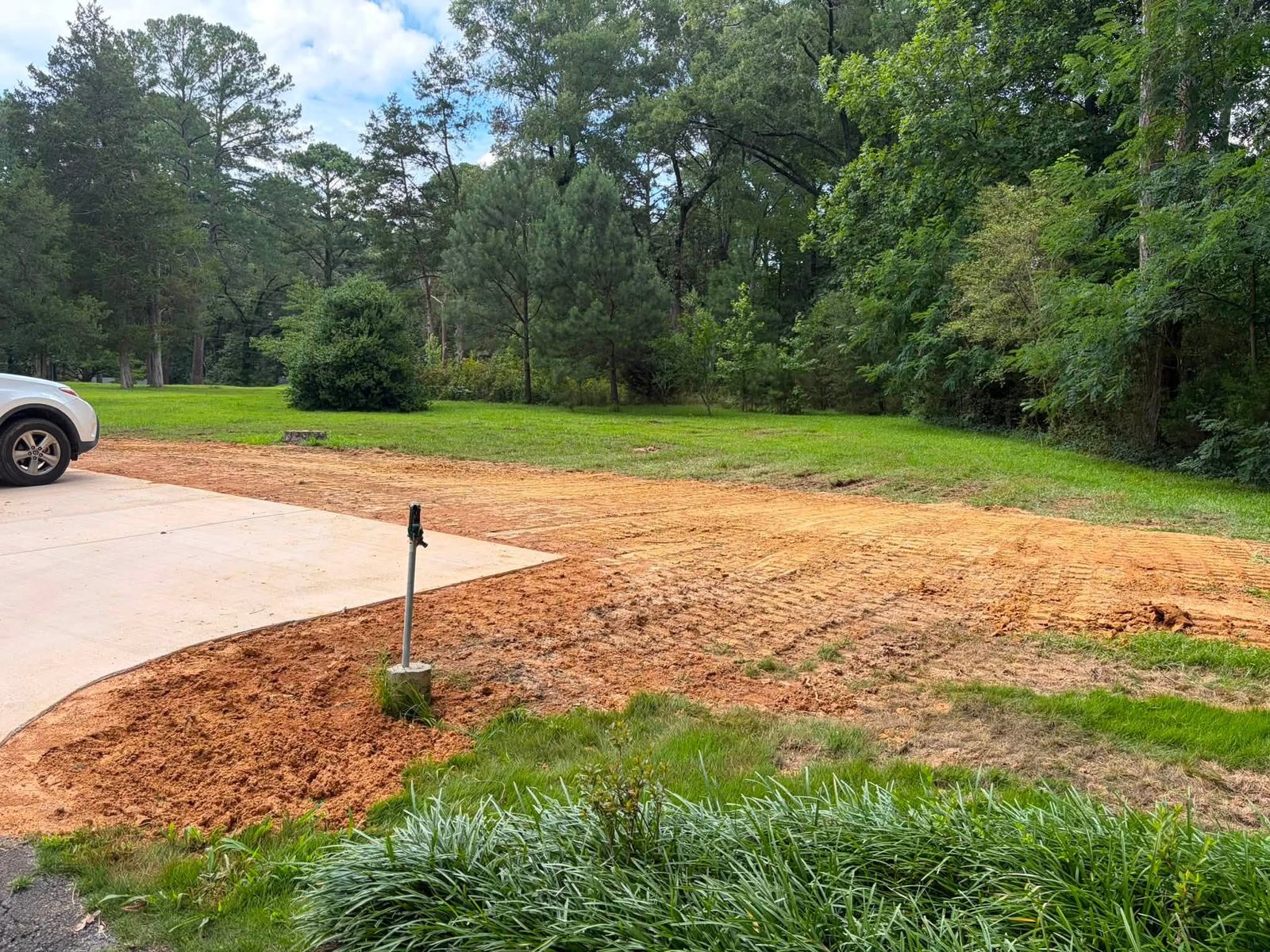
What you are left with
- Low spots filled and compacted so water moves off instead of standing
- Even ground that mows clean without scalping or bouncing
- Ground that falls away from the house instead of back toward it
- Topsoil and a finish grade, ready for seed or sod
Frequently Asked Questions
Often it is leveling. If the low spot is a dish in the surface, filling it and setting fall through it is the whole fix. If water keeps showing up there even in dry weather, or the ground stays soggy while the rest of the yard is firm, that is water moving underground and it takes a drain to carry it away. We walk the yard and tell you which one you have before quoting the work.
Yes, that is one of the main reasons to regrade a yard. We cut and fill to turn the fall around so the ground drops away from the foundation, porch, and crawl space instead of feeding water into them. Where a lot is tight and there is not enough room to gain the fall by grading alone, the answer usually adds a swale or a drain line, which is drainage work rather than leveling.
Yes. Scalping means the deck is riding across humps and dropping into dips, so the fix is the ground, not the mower. We cut the high ground down, fill the dips, compact what goes in, and finish grade the surface so the deck rides even across the whole yard.
We coordinate it as part of the job. Fill dirt comes in when the yard does not have enough material of its own to fill the lows, and it gets spread and compacted in lifts so it holds instead of settling back out. Topsoil goes on last, over ground already at the finished grade.
No. We leave a finish grade with topsoil in place, raked out and ready to plant, and hand it off there. Seeding, sod, irrigation, and landscaping are for you or your landscaper. Tell us how the yard is getting planted before we make the last pass and we will leave the surface prepped for it.
Related Reading
Straight answers from the blog
How to Level a Yard
A bumpy lawn and a yard that holds water need very different fixes. Here is how to level a yard, when to topdress it yourself, and when it is a grading job.
Yard Flooding Fixes
Standing water in your yard after every rain? Here's why North Georgia yards flood and what actually fixes it, from regrading to French drains.
Yard Drainage Solutions
Standing water in your yard has a cause and a fix. Here is why Northwest Georgia yards hold water, the range of drainage fixes, and when to call a contractor.
Slope Erosion Control
Watching soil wash off your slope? Here's how to stop erosion on Georgia red clay before it costs you more yard, plus the fixes that actually last.
More From Legacy
Other ways we improve your land
Brush Cutting & Land Clearing
Full land clearing for lots, acreage, and fence rows: underbrush cleared, stumps addressed, ground left build-ready or pasture-ready.
Forestry Mulching
Brush and small trees ground into mulch where they stand, on a dedicated CAT mulcher head the owner runs himself.
Fence Line Clearing
Reclaim overgrown fence rows and property lines. We mulch privet, briars, and saplings in place so the line is visible and open again.
Grading & Site Prep
Land grading contractors for building pads, driveways, and drainage: proper cut, fill, slope, and compaction on every job we grade.
Drainage Correction
Stop standing water, erosion, and washouts with french drains, swales, and grading built for Georgia clay and Georgia rain.
Driveways & Access
Gravel driveway installation and repair, access roads to back acreage, and culverts sized to keep water off your drive.
Recreational Land
Food plots, hunting trails, ATV paths, shooting lanes, and view cuts. We shape recreational land so you can actually use it.
Property Restoration
Overgrown today, restored tomorrow. We bring neglected land, lots, and pastures back to clean, maintained, usable shape.
Excavation & Dirt Work
Dirt work is our bread and butter: digging, fill, stumps, hauling, and the heavy shaping that makes every other project possible.
Bush Hogging
Maintenance mowing for rough ground: pastures, hay fields, trails, roadsides, and vacant lots cut down with a rotary cutter.
Demolition & Removal
Old sheds, barns, mobile homes, slabs, and pens taken down, loaded out, and hauled off, with the ground left clean and level.
Counties Where This Leads
Where the ground makes this the first job, not an add-on
Catoosa County, GA
Drainage, drives, grading, and clearing on Catoosa County, GA ground outside Ringgold and Fort Oglethorpe. Veteran owned. (706) 936-4615.
Cobb County, GA
Drainage, yard leveling, and small-lot grading on unincorporated Cobb County, GA. Veteran owned, out of Rome. (706) 936-4615.
Douglas County, GA
Drainage, grading, yard leveling and dirt work on Douglas County, GA property outside the city limits. Veteran owned, out of Rome. (706) 936-4615.
Fulton County, GA
Drainage, yard leveling, grading, and drives on larger north Fulton County, GA lots in Roswell and Milton. Veteran owned. (706) 936-4615.
Cherokee County, GA
Clearing, drives, drainage, and yard leveling on unincorporated Cherokee County, GA acreage. Veteran owned, out of Rome. (706) 936-4615.
· 27 reviews on Google · Powered by Google
Chris Fedderson
“Just 10 days after having met John he was in my yard with dirt and machinery, and those days included waiting on the weather some. John did a fantastic job; better than I had envisioned. I definitely WILL have him back for any future projects. ... now, if I could just get him to pull weeds.”
Maria Spohn
“We recently hired Legacy Land Care LLC for an erosion issue, 1/4 of property washed away, we also had drainage issues, and we couldn't be happier with the results! ... The crew was incredibly professional, arrived on time, and respected our home by cleaning up at the end of every workday.”
Get Your Free Estimate Today!
Tell us about your land and what you are trying to get done. We will get right back to you, usually the same day.
Your information stays private. No spam, no pressure, no obligation.