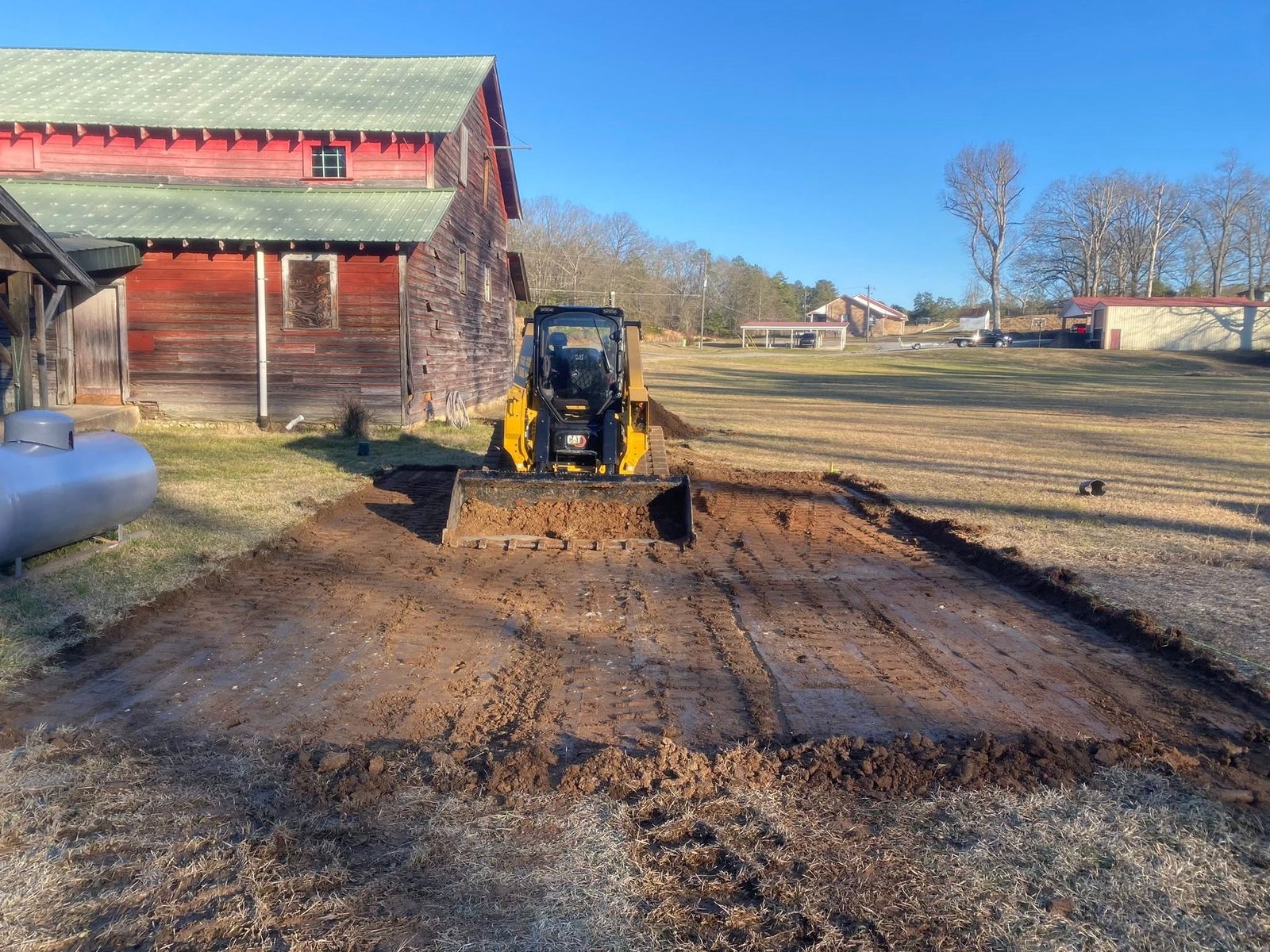
Standing water in a yard is not bad luck. It has a cause, and it has a fix. In Northwest Georgia the cause usually starts with the same thing: red clay sheds water instead of soaking it up, so when the ground does not fall the right way, that water has to go somewhere. It goes against your foundation, across your driveway, or straight down a slope until it washes out. This is the whole picture of what makes a yard hold water, the range of ways to fix it, and the point where it stops being a weekend project and becomes a job for someone with a machine.
Why your yard holds water
Almost every standing-water problem traces back to one of three things, and often all three at once. The clay does not drain, so rain sits on top instead of sinking in. The grade falls the wrong way, toward the house or toward a low spot rather than away to somewhere lower. And there is no outlet, no lower point for the water to actually leave toward, so even water that moves just pools somewhere else. Compacted fill left behind by old construction and downspouts that dump roof water in one concentrated spot both make all of it worse. If you want the symptom side in more detail, we wrote a separate piece on why a yard floods and what the standing water is telling you.
Surface water or water moving underground
Before any fix makes sense, you have to know which kind of water you are fighting, because the two need opposite solutions. Surface water sheets and pools on top of the ground during and right after a rain, then mostly clears when the sun comes out. That is a grading problem. Water moving underground is different: the ground stays soggy for days, the low areas stay soft, and water seems to wick up from below. That is a job for something that intercepts water under the surface. Getting this call right is the entire difference between a fix that works and money spent on the wrong thing. We diagnose which one you have before we quote anything.
The range of drainage fixes
There is no single yard drainage solution, there is a toolbox, and the right answer is usually a combination.
- Regrading. Reshaping the ground so it falls away from your house and toward an outlet. This is the foundation of most surface-water fixes, and often it is the only thing a yard actually needs.
- Swales and berms. A shallow shaped channel that carries surface water off, or a low ridge that steers it away from where you do not want it. Cheaper than pipe when the grade cooperates.
- French drains. A gravel-and-pipe trench that collects underground water and carries it out. The right tool for soggy ground and water wicking toward a structure, and the wrong tool for water that is only ever on the surface. We cover the how in installing a French drain in Georgia clay and the money side in our French drain cost guide.
- Culverts. Pipe that carries water under a driveway or crossing so it does not run down the middle of it. If your problem is water crossing an access point, start with whether you need a driveway culvert.
- An outlet. The part people forget. Every drain and swale has to daylight somewhere lower, or you have just moved the puddle. Finding and cutting to a real outlet is half of what makes drainage work.
Erosion is drainage that already went wrong
If your problem has moved past standing water to red clay washing away, gullies forming, or a slope losing ground every storm, that is uncontrolled water that has been running the same path long enough to cut. The fix is the same principle: control where the water goes first, then repair what it carved. We walk through it in how to stop erosion on a Georgia slope.
What you can do yourself, and what needs a machine
We would rather tell you the truth than sell you a job you do not need. Plenty of small drainage work is reasonable to do yourself: extending downspouts away from the house, cutting a shallow swale by hand, keeping gutters and existing drains clear, and regrading a small bed. A yard that will not shed water is often a grading problem too, which is how to level a yard the right way. Where it stops being weekend work is regrading a whole yard to fall correctly, trenching a real French drain to depth in clay, setting a culvert, and finding a lower outlet the water can actually leave through. Those need a machine and someone who reads grade for a living, because doing them halfway usually means paying twice.
Who to call for a drainage problem in your yard
This is where people lose time. A landscaper plants around the wet spot. A plumber works on the pipes inside your house. Neither one is set up to fix why the ground holds water. A yard drainage problem is a dirt-and-water job: reading the fall, cutting the ground to move water the right direction, and installing a drain and an outlet with an excavator. That is grading and excavation work, and it is exactly what we do. Our drainage and water control work across Rome and Northwest Georgia starts the same way every time, by figuring out whether you are fighting surface water or water underground, then correcting it with the right mix of grading, French drains, swales, and culverts.
Water against your foundation is not a wait-and-see problem
Most drainage issues can wait for a dry week and a plan. The one that should not is water pooling against your foundation. Saturated soil at the foundation is what leads to settling, a wet crawl space, and cracks, and every one of those costs far more to fix than the drainage would have. If your standing water is at the house, move on it before the ground does the deciding for you.
Not sure what is causing your standing water, or which fix your yard actually needs? Call (706) 936-4615 or request a free quote. We walk the property, tell you straight whether it is surface water or water moving underground, and give you a real fix and a real number. The estimate costs you nothing.