Drainage Correction
Drainage & Water Control
Stop standing water, erosion, and washouts with french drains, swales, and grading built for Georgia clay and Georgia rain.
What this looks like on your land
Northwest Georgia red clay sheds water instead of absorbing it, so when the ground around your home or driveway does not fall the right way, that water goes somewhere: against your foundation, across your driveway, or straight down a slope until it washes out. We diagnose whether you are fighting surface water or water moving underground, then correct it with the right mix of french drains, swales, berms, culverts, and regrading so your property finally drains the way it should.
What's included
- French drain installation for foundations, basements, and chronic wet spots
- Swale and berm shaping for surface water control
- Culvert and drainage pipe installation at driveway and road crossings
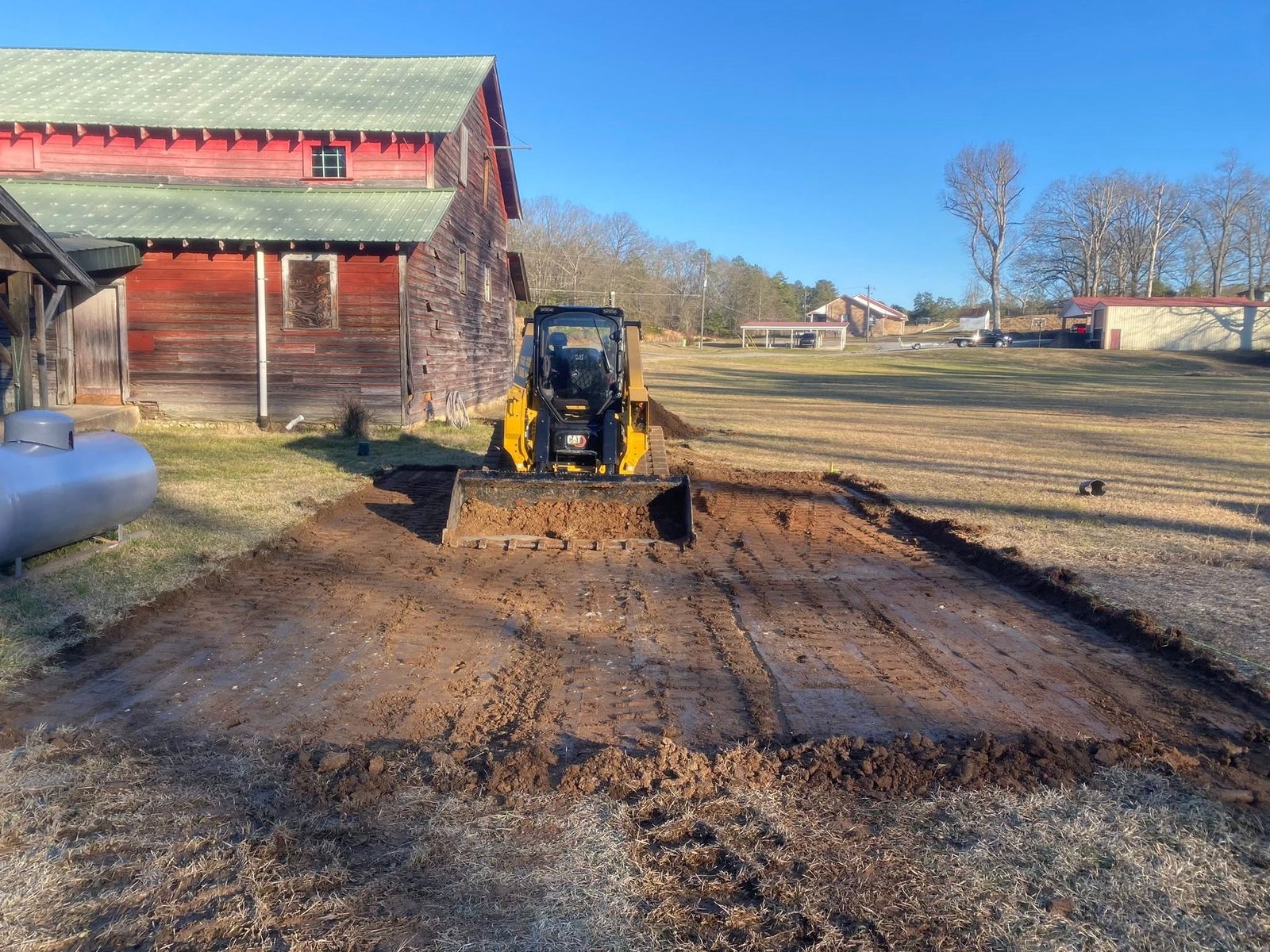
- Re-grading to establish positive fall away from structures
- Erosion control and washout repair on slopes and banks
- Standing water and low-spot correction in yards and lawns
- Daylighted outlets that carry water clear of the house and drives
Why Georgia Clay Won't Drain Itself
Most of Northwest Georgia sits on heavy red clay, and clay particles pack together so tightly that rainwater has almost nowhere to go except sideways across the surface. Sandy or loamy soil soaks up a hard rain in an hour. Clay holds it on top, which is why the same low spot in your yard fills up after every storm and the same stretch of driveway turns into a rutted mess.
The fix is rarely one thing. Standing water near a foundation, a washed-out slope, and a driveway that channels water instead of shedding it usually need different corrections working together: shaping the ground to move surface water, adding a french drain where water is moving underground, or both.
French Drain Installation
A french drain handles water that is moving under the surface, not on top of it, which is why regrading alone does not fix every wet-yard problem. We trench along the path the water is taking, set a perforated pipe wrapped in fabric and bedded in gravel, and run it to a daylight outlet where the water can discharge downhill and away from the house instead of resurfacing in the same low spot.
French drain installation near a foundation is some of the most common drainage work we get called for in Rome and Northwest Georgia. If a basement wall stays damp, a crawl space smells wet, or a section of yard never dries out even when the rest of the property is fine, that is usually water moving underground, and a properly installed french drain is what carries it away instead of masking it.
Swales, Berms, and Surface Drainage
Surface water is different: it is what you can see running across the ground during a storm, and it gets corrected by shaping the ground, not by burying pipe. A swale is a shallow, graded channel that catches surface flow and carries it to where it belongs. A berm does the opposite job, a low mound that redirects water away from a structure or planting bed. Both work with gravity, so getting the fall right is what makes them hold up season after season.
We shape swales and berms as part of the same visit where we correct the fall around a home, and where drainage work overlaps with a broader grading job, we treat it as one mobilization instead of two.
Culverts, Erosion, and Washout Repair
Where a driveway or access road crosses a drainage path, water either goes through a culvert or it goes over the driveway, and over the driveway is what causes ruts and washouts after every hard rain. We install culvert and drainage pipe sized to the crossing so water has a controlled path underneath instead of cutting its own path through the gravel.
On slopes, standing water is not the only risk. Moving water on bare or thin ground strips topsoil and cuts channels that get deeper with every storm. We regrade washed-out slopes, reestablish stable fall, and add the culverts, swales, or french drains needed to keep the erosion from coming back.
When Drainage Work Crosses the One-Acre Line
Georgia's Erosion and Sedimentation Act sets a one-acre land disturbance threshold, and larger regrading or drainage projects in the Rome and Floyd County area can trigger permitting through the Rome-Floyd County Building Inspection Department. Most yard and driveway drainage jobs stay well under that threshold, but if your project is part of a bigger site plan, we will tell you upfront whether it is likely to cross that line so there are no surprises with the county.
Where this work comes up
Water is a standing problem on this ground. Rome sits where three rivers meet, and around Lindale the tight older lots and the open pasture behind them each shed water differently and need different answers.
Drainage work often crosses the same permitting line. Read more on when Georgia requires a permit to disturb land.
Every job starts with a free, honest on-site estimate. Call (706) 936-4615 and tell us about your property.
What you are left with
- A foundation and crawl space no longer fighting standing or underground water
- A driveway that sheds water instead of rutting and washing out
- A yard that drains after a storm instead of holding water for days
- Slopes and banks that hold their soil instead of washing out
Frequently Asked Questions
Clay holds water instead of absorbing it, so without the right slope and drainage, rain pools on the surface instead of soaking in. We fix it by shaping the ground to move water and, where the problem is underground, adding a french drain to carry it away.
A swale is a shaped channel that moves water you can see running across the surface. A french drain is buried pipe and gravel that catches water moving underground, like a damp basement wall or a low spot that never dries out. Many properties need both, working together.
Yes. Washouts usually mean water is crossing the driveway instead of running under it. We re-grade for proper crown and slope and add a culvert where needed so water has a controlled path underneath instead of cutting its own path through the gravel.
Yes. A damp basement wall, a wet crawl space, or a yard that stays soggy even in dry weather is usually water moving underground. We trench, place perforated pipe wrapped in fabric and gravel, and run it to a daylight outlet away from the house.
Most yard and driveway drainage work is well under Georgia's one-acre land disturbance threshold and does not trigger permitting. If your project is part of a larger site plan that could cross that line, we will flag it upfront so you can check with the Rome-Floyd County Building Inspection Department before we start.
Related Reading
Straight answers from the blog
Yard Flooding Fixes
Standing water in your yard after every rain? Here's why North Georgia yards flood and what actually fixes it, from regrading to French drains.
French Drain Cost
What a French drain costs across North Georgia, Southeast Tennessee, and Northwest Alabama, what drives the price, and how to tell if you need one.
French Drain Installation Guide
Learn how to install a French drain in Georgia red clay: proper slope, gravel, filter fabric, and drainage that actually works long term.
Slope Erosion Control
Watching soil wash off your slope? Here's how to stop erosion on Georgia red clay before it costs you more yard, plus the fixes that actually last.
More From Legacy
Other ways we improve your land
Brush Cutting & Land Clearing
Full land clearing for lots, acreage, and fence rows: underbrush cleared, stumps addressed, ground left build-ready or pasture-ready.
Forestry Mulching
Brush and small trees ground into mulch where they stand, on a dedicated CAT mulcher head the owner runs himself.
Fence Line Clearing
Reclaim overgrown fence rows and property lines. We mulch privet, briars, and saplings in place so the line is visible and open again.
Grading & Site Prep
Land grading contractors for building pads, driveways, and drainage: proper cut, fill, slope, and compaction on every job we grade.
Driveways & Access
Gravel driveway installation and repair, access roads to back acreage, and culverts sized to keep water off your drive.
Recreational Land
Food plots, hunting trails, ATV paths, shooting lanes, and view cuts. We shape recreational land so you can actually use it.
Property Restoration
Overgrown today, restored tomorrow. We bring neglected land, lots, and pastures back to clean, maintained, usable shape.
Excavation & Dirt Work
Dirt work is our bread and butter: digging, fill, stumps, hauling, and the heavy shaping that makes every other project possible.
Bush Hogging
Maintenance mowing for rough ground: pastures, hay fields, trails, roadsides, and vacant lots cut down with a rotary cutter.
Demolition & Removal
Old sheds, barns, mobile homes, slabs, and pens taken down, loaded out, and hauled off, with the ground left clean and level.
Yard Leveling
Bumpy, rutted, or holding water? We cut the highs, fill the lows, and set fall away from the house so the yard drains and mows clean.
Counties Where This Leads
Where the ground makes this the first job, not an add-on
Bartow County, GA
Land clearing, drainage, grading, and drives on unincorporated Bartow County, GA acreage. Veteran owned, out of Rome. (706) 936-4615.
Catoosa County, GA
Drainage, drives, grading, and clearing on Catoosa County, GA ground outside Ringgold and Fort Oglethorpe. Veteran owned. (706) 936-4615.
Cherokee County, AL
Land clearing, grading, drainage and drives on Cherokee County, AL acreage and Weiss Lake ground. Veteran owned, out of Rome. (706) 936-4615.
Cobb County, GA
Drainage, yard leveling, and small-lot grading on unincorporated Cobb County, GA. Veteran owned, out of Rome. (706) 936-4615.
Floyd County, GA
Land clearing, grading, drainage, and drives on Floyd County, GA acreage outside the city limits. Veteran owned, based in Rome. (706) 936-4615.
Gordon County, GA
Shale ground, wet bottoms, and river country. Land clearing, grading, and drainage on unincorporated Gordon County, GA acreage. Call (706) 936-4615.
Paulding County, GA
Grading, drainage, drives and clearing on Paulding County, GA acreage outside Dallas and Hiram. Veteran owned, out of Rome. (706) 936-4615.
Polk County, GA
Land clearing, grading, drainage, and gravel drives on unincorporated Polk County, GA acreage. Veteran owned, out of Rome. (706) 936-4615.
Douglas County, GA
Drainage, grading, yard leveling and dirt work on Douglas County, GA property outside the city limits. Veteran owned, out of Rome. (706) 936-4615.
Fulton County, GA
Drainage, yard leveling, grading, and drives on larger north Fulton County, GA lots in Roswell and Milton. Veteran owned. (706) 936-4615.
Cherokee County, GA
Clearing, drives, drainage, and yard leveling on unincorporated Cherokee County, GA acreage. Veteran owned, out of Rome. (706) 936-4615.
· 27 reviews on Google · Powered by Google
Chris Fedderson
“Just 10 days after having met John he was in my yard with dirt and machinery, and those days included waiting on the weather some. John did a fantastic job; better than I had envisioned. I definitely WILL have him back for any future projects. ... now, if I could just get him to pull weeds.”
Maria Spohn
“We recently hired Legacy Land Care LLC for an erosion issue, 1/4 of property washed away, we also had drainage issues, and we couldn't be happier with the results! ... The crew was incredibly professional, arrived on time, and respected our home by cleaning up at the end of every workday.”
Get Your Free Estimate Today!
Tell us about your land and what you are trying to get done. We will get right back to you, usually the same day.
Your information stays private. No spam, no pressure, no obligation.