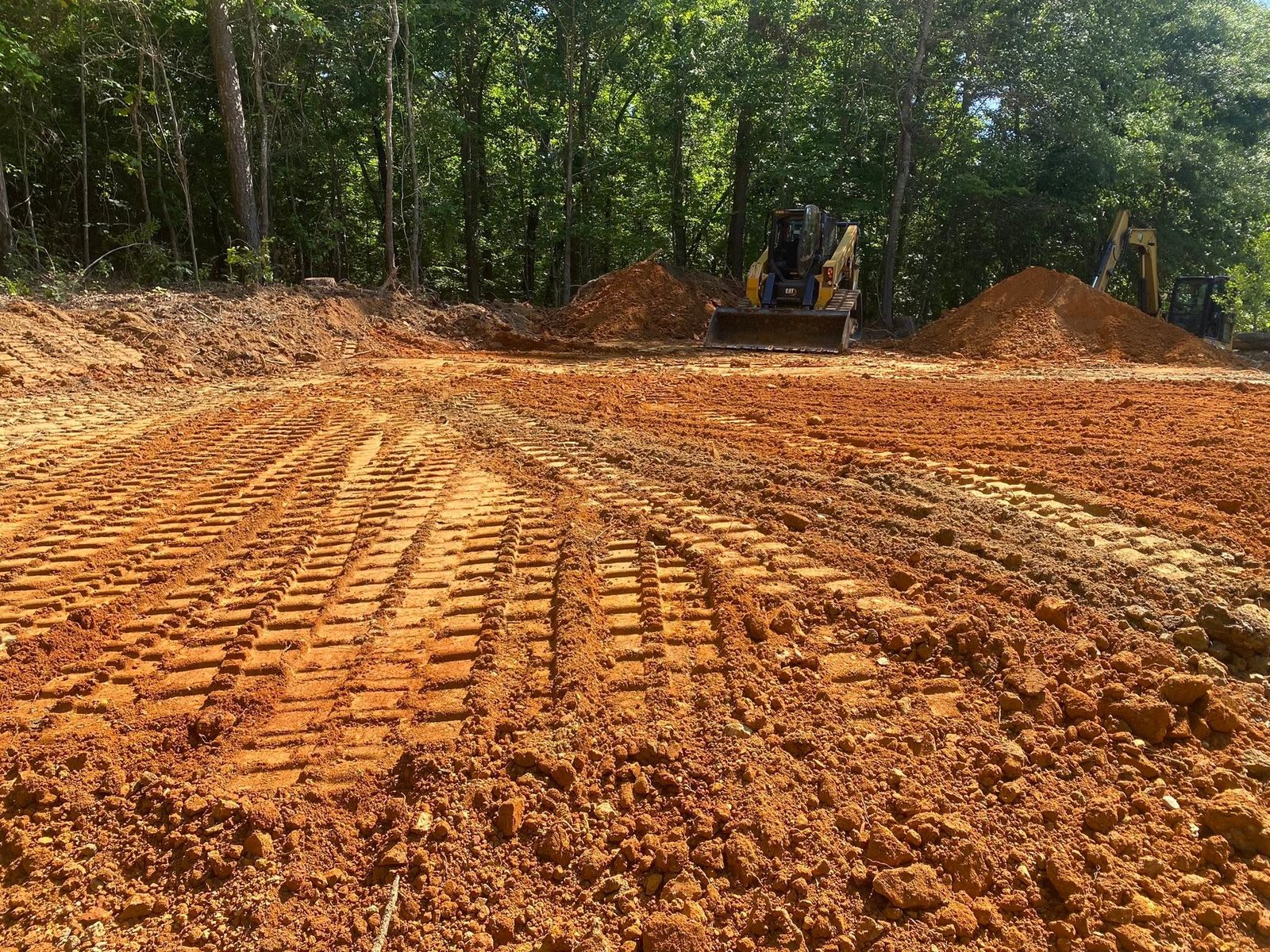
If you've stood at the edge of your yard after a hard rain and watched brown water carve a new path through the grass, you already know the problem. Erosion doesn't happen slowly here. Georgia red clay can lose real ground in a single storm, and once a slope starts washing out, it gets worse every time it rains.
Why Red Clay Slopes Erode So Fast
Red clay is dense and tight, so water can't soak into it the way it soaks into sandy or loamy soil. Instead of draining down, water runs off the top, and on a slope that runoff picks up speed fast. A few things make it worse:
- No ground cover. Bare clay, thin grass, or a freshly graded slope has nothing to slow water down or hold soil in place.
- Concentrated water. Downspouts, driveways, and low spots funnel runoff into one path instead of letting it spread out, and that concentrated flow cuts deep fast.
- No planned path. If water doesn't have a route off your property, it picks its own, usually the shortest way downhill, straight through whatever is in the way.
The Warning Signs You Shouldn't Ignore
Erosion rarely shows up as one big event, especially on red clay. It's usually a slow creep that gets written off as normal yard wear until it isn't. Watch for:
- Bare gullies or small rills cut into the slope after rain
- Tree or shrub roots exposed where soil used to cover them
- A fan of sediment building up at the bottom of the slope or in a ditch
- A low spot in the yard that keeps getting deeper no matter how many times you fill it
- Your property line slowly washing back toward the house
Any one of these means water is moving soil somewhere it shouldn't. Left alone, the problem doesn't stay the same size. It grows.
How to Stop Erosion on a Slope: The Right Fix for Each Problem
There's no single fix for every slope. The right approach depends on how much water you're dealing with, how steep the ground is, and where that water is trying to go.
- Reshape and regrade the slope. If the grade is uneven or too steep, regrading lets water shed evenly across a red clay slope instead of collecting into one low spot. This is often the first step before anything else will hold.
- Divert water with swales and a French drain. A swale is a shallow, graded channel that carries surface water around a problem area instead of through it. A French drain handles water moving underground, catching it before it saturates the slope. Our French drain cost guide breaks down what that piece of the job typically involves.
- Establish ground cover. Seed paired with erosion control matting holds soil in place while grass roots take hold, and it works well on slopes that aren't seeing heavy concentrated flow.
- Hard armor with riprap. Where water concentrates, at a drain outlet, a ditch, or a steep cut, rock riprap absorbs the energy of moving water so it stops cutting.
- Catch basins. A catch basin collects water at a low point and carries it off through pipe instead of letting it pool or run wherever it wants.
Most slopes that are actively eroding need more than one of these working together, not just a single fix.
Why Erosion Control Is Really About Water, Not Dirt
We've seen slopes get filled with fresh dirt or reseeded more than once, only to wash out again after the next hard rain. The dirt was never the problem. The water was. If you don't control where water goes, whatever you put on the slope, soil, seed, or sod, is just the next thing waiting to wash away.
The durable fix starts with figuring out where the water is coming from and giving it a controlled path off the property. Once that's handled, ground cover and grading hold. Our drainage and water control service and grading and site prep work are built around that order: manage the water first, then finish the ground.
If you're watching soil wash off your property, the sooner we look at it, the less it usually costs to fix. Get a free estimate and we'll walk the slope with you, tell you honestly what's driving the erosion, and lay out exactly what it takes to stop it for good. Call us at (706) 936-4615.