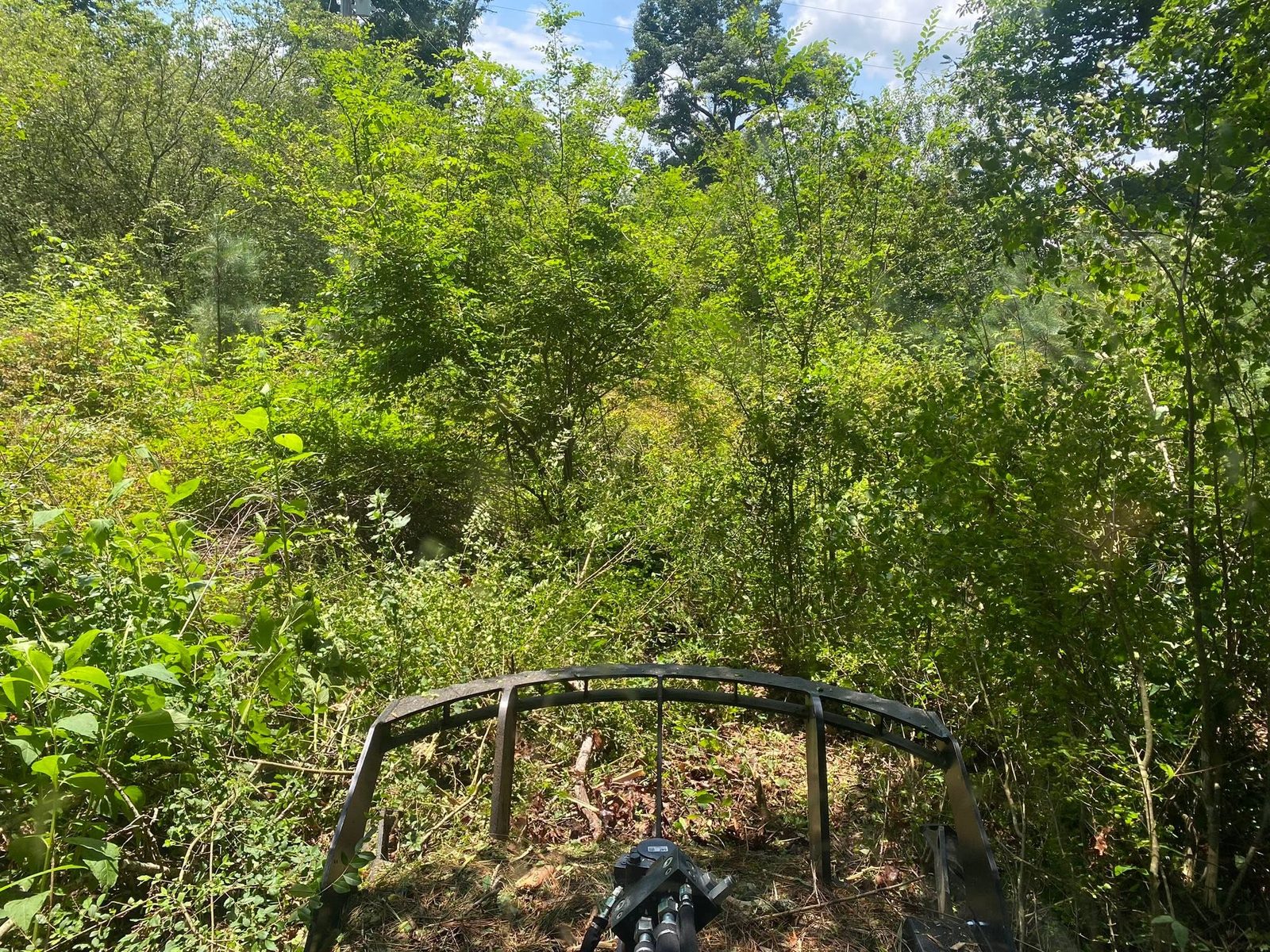
Overgrown fields, fence lines, and wooded lots all need clearing at some point, but bush hogging and forestry mulching solve two different problems. Pick the wrong one and you either overpay for a bigger job than you need, or send a mower into brush it was never built to handle. Here's how to tell which one fits your land.
What Is Bush Hogging (Brush Hogging)?
Bush hogging, also called brush hogging, uses a rotary cutter towed behind a tractor to mow down tall grass, weeds, and light brush. The cuttings get left in place to break down on their own. It's a maintenance tool, not a reclaiming tool, so it works best on ground that's already open.
- Handles grass, weeds, briars, and brush up to a couple inches thick
- Leaves cuttings on the ground instead of hauling debris away
- Covers open acreage fast
- Fits pastures, hay fields, fence lines, trails, and vacant lots that just need upkeep
What Is Forestry Mulching?
Forestry mulching runs a mulching head over standing brush, vines, and small trees and grinds it all into a layer of mulch in one pass. Instead of maintaining ground that's already clear, it's built to take wooded or heavily overgrown land and turn it back into usable space. If you're looking at a lot that's grown up in saplings and brush for a few years, this is usually the right call, not a mower.
- Grinds brush, vines, and small trees into mulch on site
- Turns a wooded tangle into walkable, usable ground in one pass
- Leftover mulch layer helps hold soil and slow regrowth
- No burn piles and no hauling debris off the property
We offer both as part of our land clearing and brush cutting service, along with dedicated forestry mulching for heavier ground.
Choose Bush Hogging or Forestry Mulching?
Choose bush hogging when:
- The ground is already open and you're just keeping grass and weeds down
- You're maintaining pastures, hay fields, trails, or fence lines on a regular schedule
- Growth is mostly grass, weeds, and brush under a couple inches thick
- You need a fast, lower cost pass over a lot of acreage
Choose forestry mulching when:
- The land has small trees, saplings, or thick brush a bush hog can't cut
- You're reclaiming ground that hasn't been maintained in years
- You want debris ground up and left as mulch instead of piled or hauled off
- You need the work to hold up for longer than a season
Cost and Frequency: What to Expect
Bush hogging is the cheaper option per visit, but it's a repeat job. Most fields and pastures need it mowed down a few times a year to stay ahead of regrowth, so the cost adds up over a season. Rates run roughly $60 to $200+ per hour depending on terrain, brush density, and how far out the property sits, and most contractors price by the acre or the hour rather than a flat fee.
Forestry mulching costs more per acre going in, since the machine is doing heavier work in a single pass. Per-acre pricing commonly runs somewhere in the $500 to $2,500+ range, depending on how thick the growth is and how much ground you're covering. But that one pass can reclaim ground that's been growing up for years and hold back regrowth for several seasons, so it often costs less over time than repeated mowing on badly overgrown land. Every property is different, which is why we walk the ground and give a free estimate instead of quoting off a phone call. For a closer look at what drives the price, see our breakdown of land clearing cost per acre.
Plenty of Properties Need Both
A lot of the land we work isn't one job or the other. We'll mulch a wooded or overgrown section to reclaim it, then bush hog the open fields and trails around it on a regular schedule to keep it that way. If part of your property is grown up and part just needs upkeep, that combination is usually the most practical path.
Not sure which one your property needs? Get a free estimate and we'll walk the ground with you and tell you straight what it'll take. Call us at (706) 936-4615 or reach out through our land clearing service page to get started.