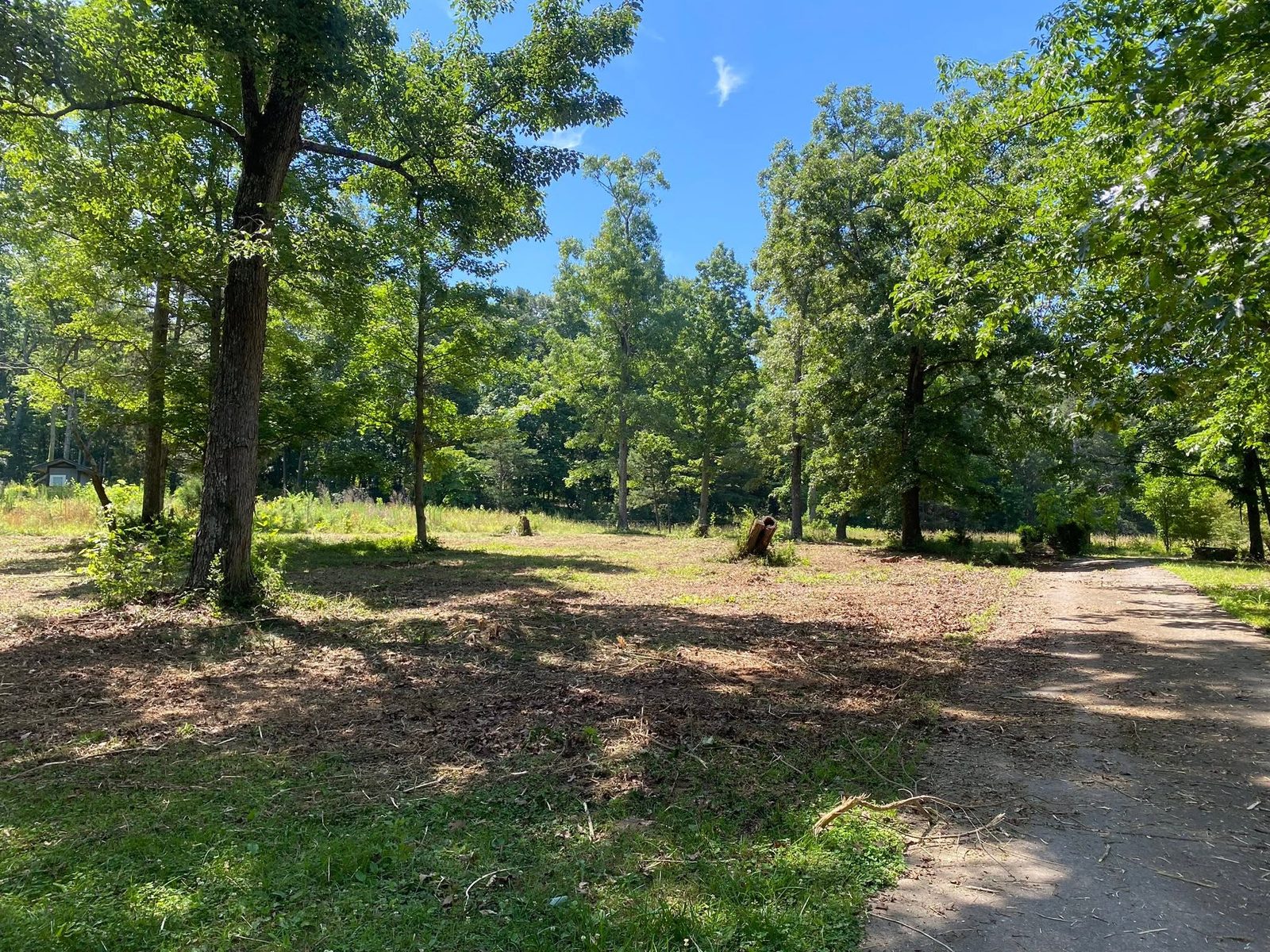
Land clearing sounds like a single job and is really a whole category of them. It is the work of taking a property from overgrown, wooded, or unusable to open and ready for whatever comes next: a homesite, a pasture, a food plot, or a lot to sell. Two clearing jobs can look nothing alike because the finish, not the machine, is the point. This guide covers what land clearing is, the methods that get you there, the steps involved, and how to choose the right approach for your ground.
Land clearing is an outcome, not one machine
Think of land clearing as a result you are after, not a piece of equipment you rent. Some ground only needs the brush knocked back so you can walk it. Other ground needs every stump and root pulled so a foundation can go in. When we clear a lot, we first settle what the ground has to become, because that decides everything after: the method, the machines, the time, and the price.
The main land clearing methods
No single tool fits every property. Most jobs use one, or a mix, of these four methods.
- Forestry mulching. One machine grinds standing saplings, vines, and underbrush into a mulch blanket where they stand, in one pass. Nothing gets hauled, the dirt is never stripped, and the roots stay to hold the soil. It is the cleanest, lowest-cost method for acreage and trails. See our forestry mulching page.
- Dozer push and pile. A bulldozer blade shoves vegetation over, roots and all, into piles to burn or haul off. It disturbs more soil but hands back bare, buildable ground, common on building sites. For the tradeoffs, read forestry mulching versus bulldozing.
- Cut and haul. Larger trees are felled, cut up, and carried off. This is the method when you want the timber gone rather than chipped, or when the trunks are too big to mulch.
- Grubbing and root removal. An excavator pulls stumps and root balls and rakes the roots out. It separates a lot that looks cleared from one that is truly build-ready, since a stump left under a slab becomes a problem later.
Plain mowing and bush hogging sit next to these but do a different job: upkeep on open ground, not reclaiming overgrown land. If your land is more field than forest, our comparison of bush hogging versus forestry mulching sorts out which you need.
The land clearing process, step by step
Most clearing jobs move through the same order of operations.
- Walk the ground and set the goal. We read the growth, the slope, where water runs, and where the lines and utilities sit, then mark the trees worth keeping. The goal is set before anything is cut.
- Clear the underbrush. Privet, briars, vines, and saplings come down first, usually mulched in place. This alone opens up most properties enough to see what you have.
- Take down the trees that have to go. Whatever is not staying is handled by the method the finish calls for: mulched, felled and hauled, or pushed out.
- Deal with the stumps and roots. If the ground has to hold a pad, footing, or driveway, the stumps and root balls get grubbed out. Going back to pasture or trail, the roots often stay to hold the soil.
- Grade and finish for the purpose. A pad gets leveled, a pasture smoothed, a trail shaped. This is where clearing hands off to grading and site prep.
- Handle the debris. Mulch stays on the ground as cover. Heavier slash, downed timber, and old fencing get hauled off on request so the property ends up finished.
How long it runs depends on acreage and how heavy the growth is. We lay out realistic windows in how long land clearing takes by acreage.
How to choose a method by your end goal
The right method comes down to one question: what will the ground be used for?
- Building a home, shop, or pad. You need full clearing with stumps and roots grubbed out and the ground graded. Mulching alone will not do, since you cannot pour a footing over a root ball.
- Reclaiming pasture or farm ground. Forestry mulching usually handles it. The brush comes down, the roots stay put, and the mulch shields Georgia clay from erosion.
- Hunting and recreational land. Selective mulching opens trails, shooting lanes, and food plot edges while leaving the acorn-producing hardwoods and bedding cover you want to keep.
- Cleaning up a lot to sell or use. Often mulching the underbrush makes a property show well and feel usable, with no heavy dirt work.
Do you need a permit to clear land?
This is the part that trips landowners up, so it is worth knowing the line. Cutting and mulching vegetation that leaves the soil undisturbed is usually treated like mowing and needs no land disturbance permit. Once you move dirt, grub stumps, or grade, county rules typically apply. In Georgia, disturbing an acre or more of ground generally brings the Erosion and Sedimentation Act and its stormwater permitting into play, and erosion controls are required. Larger builds around Rome go through the Rome-Floyd County Building Inspection Department. We cover the specifics in do you need a permit to clear land in Georgia. A quick call to the county up front costs nothing; sorting it out afterward does not.
DIY job or contractor job?
We are straight with people about what a property needs, even when that is less than they feared. Plenty of light clearing is fair game to tackle yourself: a chainsaw, a mower, and a weekend will knock back a small patch of brush, clear a short trail, or drop a few small trees. It turns into machine work when you hit real acreage, larger trees, stumps that have to come out, steep or wet ground, or a build pad on the line. Those call for iron and an operator who does this for a living, because a job done halfway is a job you pay for twice.
A contractor also carries what you cannot rent: insurance, the read on what triggers a permit, and the eye to tell a keeper hardwood from one that has to go. If the job is bigger than a chainsaw and an afternoon, clearing it right the first time is the cheaper path. Our full land clearing and brush work covers this from Rome across Northwest Georgia.
Cost depends on the growth, the terrain, and the finish, so no article can pin it to your ground. We put honest per-acre ranges and what moves them in what land clearing costs per acre in Georgia. A real figure still takes a set of eyes on the property.
If you have a lot, some acreage, or a fence row gone back to brush, we will come look, lay out what it takes, and hand you a real number. Legacy Land Care is veteran owned, owner operated, and fully insured, and the person who quotes your land is the one running the machine. Call (706) 936-4615 or ask for a free quote. The visit is free.