Bush Hogging
Bush Hogging and Brush Cutting
Maintenance mowing for rough ground: pastures, hay fields, trails, roadsides, and vacant lots cut down with a rotary cutter.
What this looks like on your land
Bush hogging is maintenance mowing for rough ground. A rotary cutter mounted on the track loader takes grass, weeds, briars, and light growth off at a set height and drops the cuttings where they fall. We bush hog pastures, hay fields, trails, roadsides, and vacant lots across Rome and Northwest Georgia to keep open ground open.
What's included
- Pasture and hay field mowing at a set cutting height
- Rotary cutting for grass, weeds, briars, vines, and light growth
- Trail and lane mowing to keep paths walkable and drivable
- Road frontage, ditch bank, and field edge passes
- Vacant lot and unused acreage mowing
- Cuttings left in place to break down instead of piled or hauled
- Repeat passes through the growing season to hold the ground
- A straight answer on whether mowing covers it or the ground needs mulching first
What Bush Hogging Is
A bush hog is a rotary cutter. Ours runs off the track loader rather than behind a farm tractor, which is what lets it get into ground a tractor has no business on. It spins a heavy blade under a steel deck and cuts everything in its path off at whatever height the deck is set to. Grass, weeds, briars, vines, and light growth go down. The cuttings stay on the ground and break down where they fall.
That is the whole job: cut and drop. Nothing gets piled, nothing gets loaded out, and the roots stay in the ground. Bush hogging and brush hogging are two names for the same work.
Because it cuts at a set height, a rotary cutter needs ground the machine can travel. Tracks help here, since they float better on soft ground and hold a side slope better than wheels, but rock, stumps, and washouts still set the limit. Open pasture, a hay field, a trail, a road bank, a vacant lot: that is what the machine is built for.
Bush Hogging vs. Forestry Mulching
These two get mixed up constantly, and picking the wrong one costs you either way. A bush hog cuts standing growth off at a set height and leaves it lying. A forestry mulcher is a different machine entirely, a mulching head that grinds standing brush and small trees into mulch in place, down at the ground.
What is growing decides which one you need. Grass, weeds, briars, and stems up to a couple of inches thick are bush hog work. Saplings, thick privet, and small trees past that are mulcher work, because a rotary cutter will either ride over them or bind up on them.
The outcome is different too. Bush hogging is upkeep. It knocks the growth down for the season and the same ground needs cutting again. Mulching reclaims ground that has gone back to brush and holds it longer. Plenty of properties want both: mulch the section that has grown up, then bush hog the open ground around it to keep it that way.
Pastures, Hay Fields, and Grazing Ground
Pasture that does not get cut goes backward. Cattle graze the grass and leave the weeds, so the weeds set seed and take a little more of the field every year. Briars push in from the fence line. Cedar and sweetgum volunteer in the corners nothing ever reaches.
A pass with the rotary cutter resets that. It takes the weeds down before they seed, evens the field back out, and puts the grass back in front of what is competing with it. On hay ground, cutting the rough edges and the spots the baler cannot use keeps the whole field working.
We cut pasture, hay ground, and open field across Rome, Floyd County, and the surrounding Northwest Georgia counties.
Trails, Roadsides, and Vacant Lots
Trails close up fast. A path cut in the spring is knee high by midsummer, and once it goes past grass and weeds, mowing is no longer the fix. Running a bush hog down a trail once or twice a season keeps it open for a truck, a side by side, or a walk back to a stand.
Road frontage, ditch banks, and field edges take the same pass wherever the ground is even enough to travel safely.
Vacant lots are their own case. An empty lot grown up in weeds and briars usually needs cutting, not clearing. If you are holding a lot, selling one, or keeping one presentable between uses, a bush hog pass is the simplest way to make it look and walk like a lot again.
How Often Ground Needs Cutting
Most pasture, field, and trail ground needs bush hogging one to three times a year. How fast it grows back decides which. A field cut in early summer and again in early fall stays ahead of most of what comes up on this ground, and a field that gets only one pass wants that pass late enough that the weeds do not get another chance to seed.
Ground that has been sitting longer is a different conversation. If a field has gone two or three seasons without a cut, what is standing in it may be past what a rotary cutter can take, and it makes more sense to mulch it once and pick mowing up after that. We walk it and tell you which one you are looking at before anything gets scheduled.
Where this work comes up
This is pasture and hay country, and open ground here does not stay open on its own. The fields and road frontage around Rockmart and Cedartown grow back every summer, and so do the trails and back acreage north of Rome toward Armuchee.
Not sure whether your ground needs mowing or something heavier? Read more on bush hogging versus forestry mulching.
Every job starts with a free, honest on-site estimate. Call (706) 936-4615 and tell us about your property.
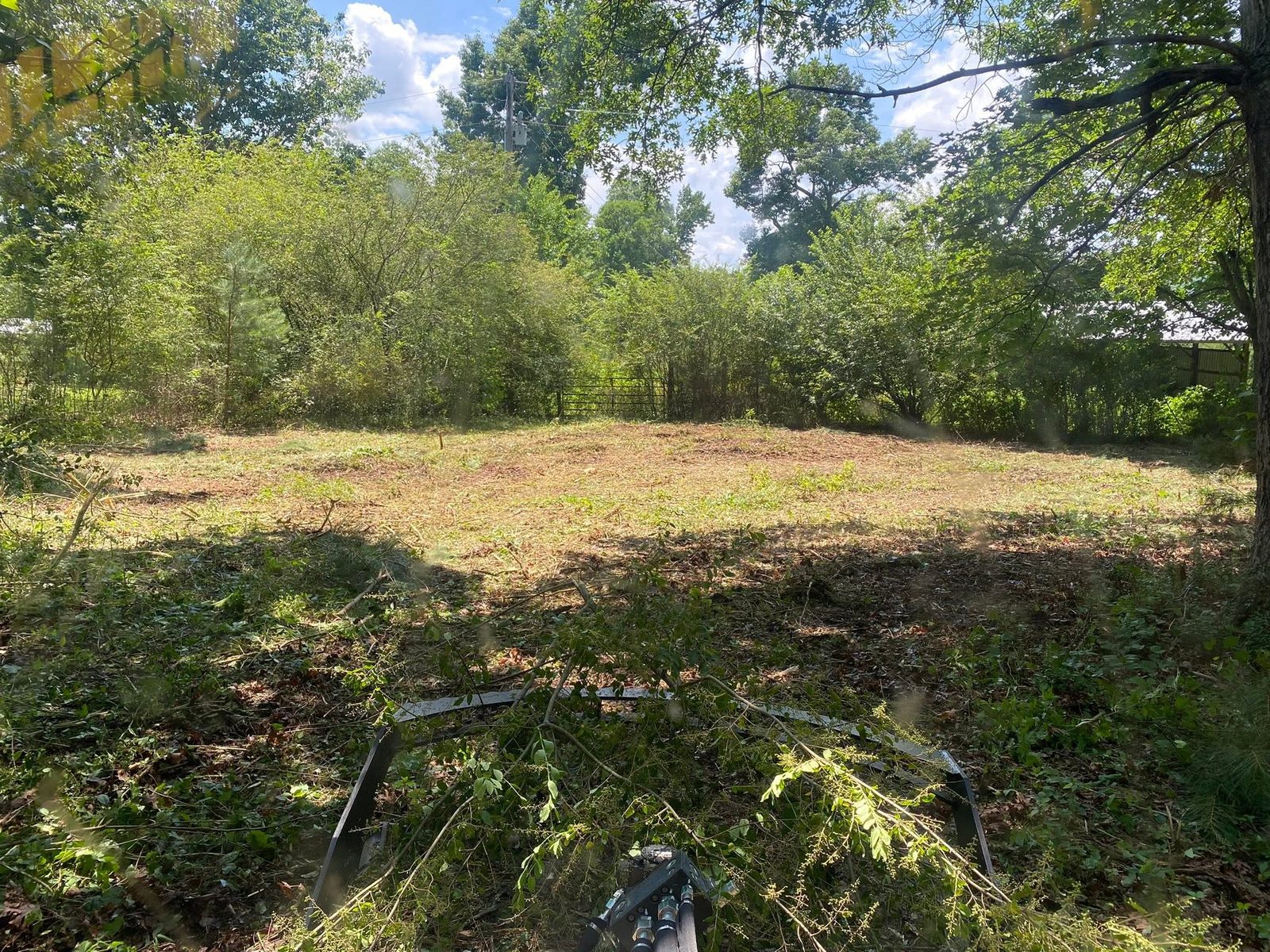
What you are left with
- Open ground that stays open instead of going back to weeds and briars
- Pasture and hay field knocked down to an even height
- Trails, lanes, and road frontage you can walk and drive again
- Cuttings left to break down in the field, nothing piled or hauled off
Frequently Asked Questions
A bush hog is a rotary cutter, run here off the track loader. It cuts grass, weeds, briars, and light growth off at a set height and leaves the cuttings lying on the ground. A forestry mulcher is a different machine that grinds standing brush and small trees into mulch in place. Bush hogging is upkeep on ground that is already open. Mulching reclaims ground that has grown up past mowing.
No. A rotary cutter handles grass, weeds, briars, and stems up to a couple of inches thick. Saplings and small trees past that need forestry mulching or full land clearing. We will tell you which side of that line your property falls on before anything gets scheduled.
Most pastures, fields, and trails need cutting one to three times a year, depending on the season and how fast that particular ground grows back. Ground kept on a regular schedule takes less time per pass than ground that has been left to go.
It depends on what is standing in it. If it is still grass, weeds, and briars, a rotary cutter will take it down. If saplings and brush have come up past a couple of inches thick, the honest answer is mulch it once and bush hog it after that to hold the line. We look at the ground before quoting so you are not paying for the wrong machine.
No, and that is how rotary cutting works. The cuttings fall where they are cut and break down into the field, so there is nothing stacked at the edge of the property and nothing to load out. If you need debris actually removed from a property, that is a different scope and we quote it separately.
Related Reading
Straight answers from the blog
Bush Hogging vs Mulching
Bush hogging or forestry mulching? See what each service does best so you pick the right fix for overgrown land in North Georgia.
What Is Forestry Mulching
What is forestry mulching, and how does forestry mulching work? A clear look at the process, forestry mulching benefits, its limits, and its best uses.
How to Get Rid of Kudzu
Kudzu removal is hard because the roots run deep. Here is why kudzu and privet keep coming back, plus the real options for clearing invasive vines.
What Is Land Clearing?
Land clearing is the outcome, not one machine. Here are the methods, the steps a job follows, and how to choose the right approach for your land.
More From Legacy
Other ways we improve your land
Brush Cutting & Land Clearing
Full land clearing for lots, acreage, and fence rows: underbrush cleared, stumps addressed, ground left build-ready or pasture-ready.
Forestry Mulching
Brush and small trees ground into mulch where they stand, on a dedicated CAT mulcher head the owner runs himself.
Fence Line Clearing
Reclaim overgrown fence rows and property lines. We mulch privet, briars, and saplings in place so the line is visible and open again.
Grading & Site Prep
Land grading contractors for building pads, driveways, and drainage: proper cut, fill, slope, and compaction on every job we grade.
Drainage Correction
Stop standing water, erosion, and washouts with french drains, swales, and grading built for Georgia clay and Georgia rain.
Driveways & Access
Gravel driveway installation and repair, access roads to back acreage, and culverts sized to keep water off your drive.
Recreational Land
Food plots, hunting trails, ATV paths, shooting lanes, and view cuts. We shape recreational land so you can actually use it.
Property Restoration
Overgrown today, restored tomorrow. We bring neglected land, lots, and pastures back to clean, maintained, usable shape.
Excavation & Dirt Work
Dirt work is our bread and butter: digging, fill, stumps, hauling, and the heavy shaping that makes every other project possible.
Demolition & Removal
Old sheds, barns, mobile homes, slabs, and pens taken down, loaded out, and hauled off, with the ground left clean and level.
Yard Leveling
Bumpy, rutted, or holding water? We cut the highs, fill the lows, and set fall away from the house so the yard drains and mows clean.
Counties Where This Leads
Where the ground makes this the first job, not an add-on
Calhoun County, AL
Clearing, drives, dirt work and brush cutting on Calhoun County, AL acreage near Anniston and Jacksonville. Veteran owned. (706) 936-4615.
Walker County, GA
Land clearing, bush hogging, fence lines, and grading on Walker County, GA acreage outside the city limits. Veteran owned, out of Rome. (706) 936-4615.
DeKalb County, AL
Clearing, fence lines, bush hogging and hunting land on DeKalb County, AL acreage. Sand Mountain to Wills Valley. (706) 936-4615.
Haralson County, GA
Bush hogging, fence lines, clearing, and mulching on Haralson County, GA farm and timber land. Veteran owned, out of Rome. (706) 936-4615.
· 27 reviews on Google · Powered by Google
Chris Fedderson
“Just 10 days after having met John he was in my yard with dirt and machinery, and those days included waiting on the weather some. John did a fantastic job; better than I had envisioned. I definitely WILL have him back for any future projects. ... now, if I could just get him to pull weeds.”
Maria Spohn
“We recently hired Legacy Land Care LLC for an erosion issue, 1/4 of property washed away, we also had drainage issues, and we couldn't be happier with the results! ... The crew was incredibly professional, arrived on time, and respected our home by cleaning up at the end of every workday.”
Get Your Free Estimate Today!
Tell us about your land and what you are trying to get done. We will get right back to you, usually the same day.
Your information stays private. No spam, no pressure, no obligation.