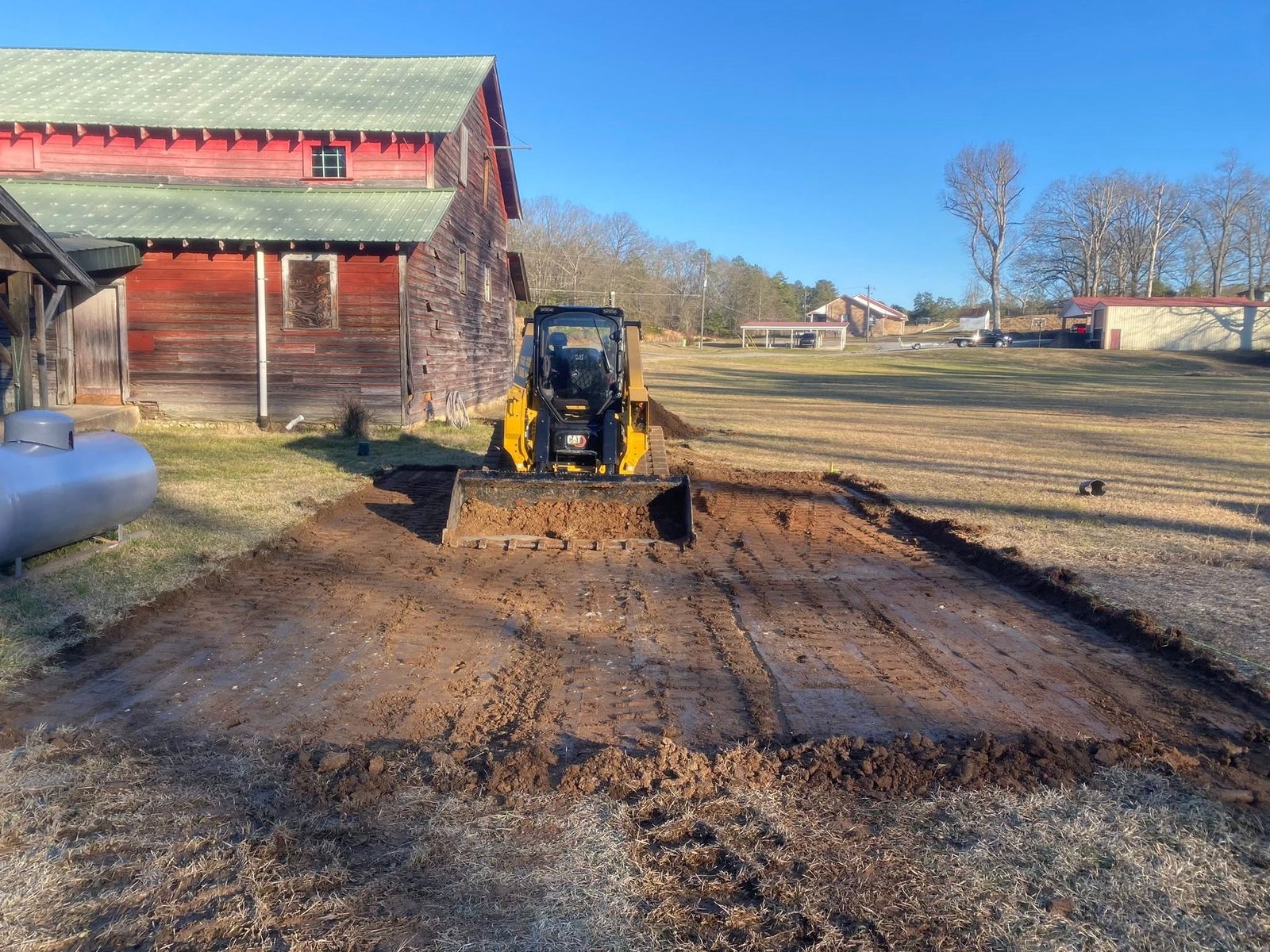
If your yard turns into a swamp every time it rains, or the grass stays soggy for days after the storm passes, you are not imagining it. Standing water in the yard is one of the most common problems we run into across Rome and North Georgia, and most of the time it comes down to a handful of causes we can spot on a single site visit.
Why Is My Yard Flooding? The Common Causes
Before you can fix standing water, you need to know why it is there. In our experience, it is almost always one or more of these:
- Heavy clay soil. Georgia red clay does not absorb water well. Rain sits on top of the ground instead of soaking in, and pools until it slowly evaporates or runs off.
- Low spots in the yard. Any dip in the grade becomes a bowl that collects water from the rest of the property.
- Ground that slopes toward the house instead of away from it. Water follows gravity. If the grade tips toward your foundation, that is exactly where it ends up.
- Downspouts dumping water right at the foundation. A gutter that empties two or three feet from the house pours hundreds of gallons into the same soggy spot every time it rains.
- Compacted soil. Years of foot traffic, mowing, or equipment can pack clay down so tight that even less water gets through.
- No path for the water to leave. Fences, driveways, neighboring grade, and landscaping can all box water in with nowhere to go.
Most yards we look at have two or three of these working against each other at once, which is why the water seems to show up everywhere.
When Standing Water Is More Than a Nuisance
A puddle that clears up in an hour is normal. It is a different story when water sits for a day or more, or keeps coming back in the same spots. Watch for these signs:
- Water pooling against the foundation. Constant moisture against your footing and walls can lead to cracking and, over time, water finding its way inside.
- A wet crawl space or basement. If the ground outside is not shedding water, that water is looking for the next lowest point, and that is often under your house.
- Mosquito breeding. Standing water is exactly what mosquitoes need to lay eggs, and it does not take much more than a few inches for a few days.
- Drowning or dying grass. Grass roots need oxygen. Sit in water too long and they rot out, leaving bare, muddy patches.
- A yard you cannot use. Soft, saturated ground is not safe for kids, pets, or mowers, and it will not hold up.
The Fixes, and When Each One Applies
There is not one fix for every yard. The right approach depends on where the water is coming from and where it needs to go.
- Regrading for positive slope. If the ground slopes toward the house or sits flat with no fall, regrading rebuilds the yard so water moves away from the foundation the way it should.
- French drains. When water is moving underground, seeping up through the soil, or showing up in a crawl space, a French drain intercepts it below the surface and carries it out to a safe discharge point. For the specifics on materials and installation, see what a French drain costs.
- Catch basins and swales. For surface water coming off a roof, driveway, or slope, a catch basin collects it and a swale routes it where it belongs instead of letting it sheet across the yard. This matters even more on sloped lots, where unmanaged runoff can carve out gullies. See our guide on stopping erosion on a slope if that sounds like your property.
- Extending downspouts. Sometimes the fix is as simple as running downspouts out several feet from the foundation instead of letting them dump at the wall.
- Filling and reshaping low spots. Small depressions can often be filled, compacted, and reshaped so they no longer hold water, especially once the bigger grading issue is corrected.
Quick Fix or Real Drainage Project? How to Tell
Not every wet yard needs heavy equipment. If the problem is one low spot in the middle of the lawn and the rest of the yard drains fine, filling and reshaping that area might be all it takes. If you are dealing with water against the foundation, a slope running the wrong way, or water showing up in more than one spot after every rain, that is usually a grading or drainage issue that needs to be solved at the source, not patched year after year.
The clay under most North Georgia yards does not give you much room for error. A quick fix that ignores the slope or the soil will need to be redone. A proper regrade or drainage system, sized for your property and tied into where the water actually needs to go, is what keeps a yard dry for good.
Get a Free Estimate
Standing water is one symptom of a bigger picture. For how the fixes fit together and how to tell which one your yard needs, see our overview of yard drainage solutions.
If your yard floods, stays soggy, or you are just tired of standing water where grass should be, we can walk the property and tell you what is actually causing it. We handle everything from small regrading jobs to a full drainage and water control system, and estimates are free. Call us at (706) 936-4615 to get a free estimate.