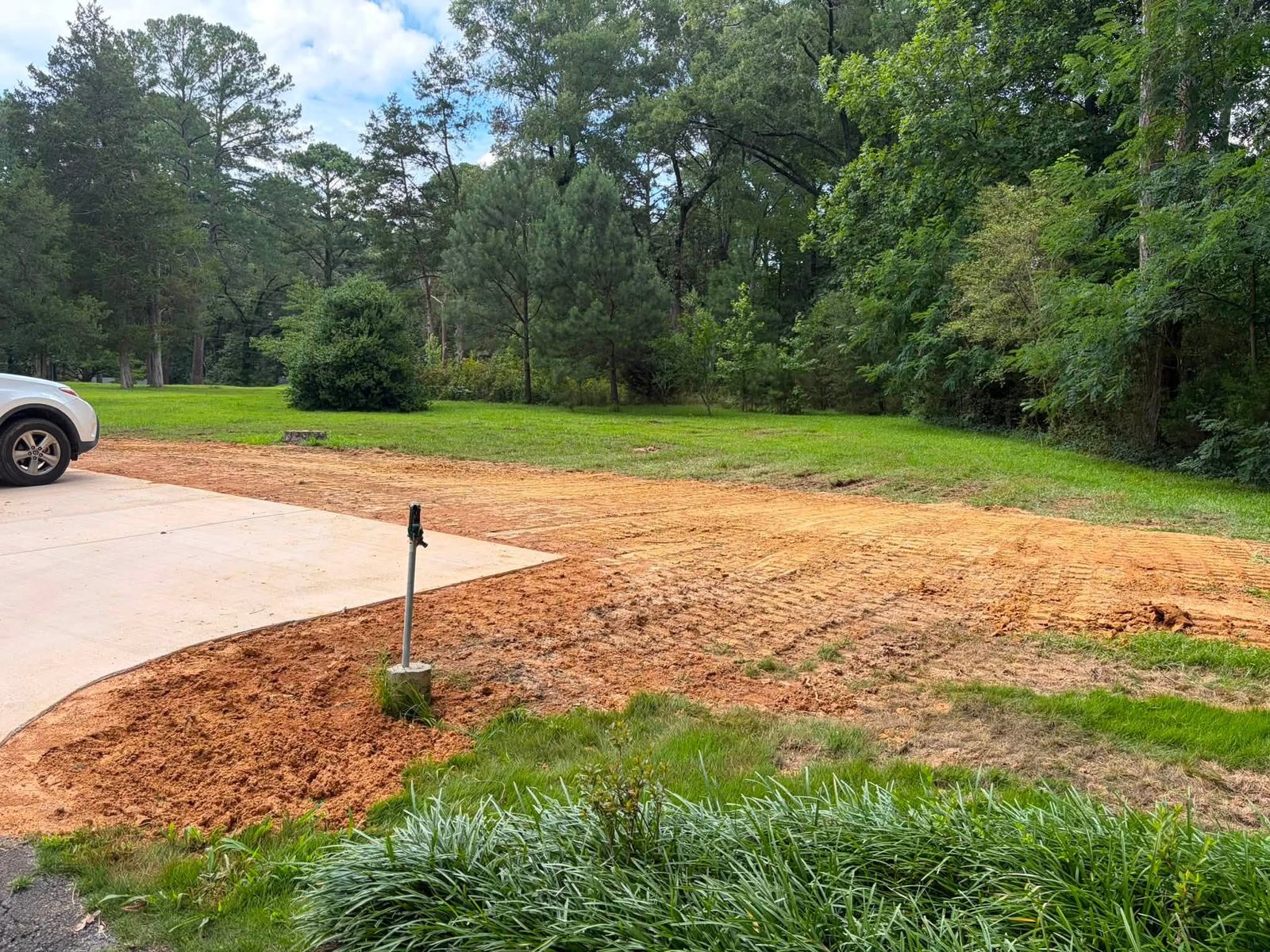
Smyrna packs about 27,000 housing units into roughly 16.2 square miles, which is around 1,600 homes per square mile and the tightest packing of any incorporated place in this corner of Cobb County. Counting 2020 census blocks inside the city limits gives about 57,300 people. Lots here are small, houses sit close to each other, and the ground between them has usually been moved at least once. Legacy Land Care works Smyrna for what those lots actually need: yard drainage, regrading, small grading jobs behind a house, and pulling out old concrete. Veteran owned, owner operated, insured, and the man who quotes it is the man on the machine.
A Town Rebuilt on Top of Itself
Roughly 34 percent of Smyrna housing has been built since 2000 and about 14 percent since 2010, while only about 17 percent still dates from before 1970. Very little of that construction happened on empty ground. It happened on lots that already had a house, a drive, and forty years of yard on them.
That history is the single most useful thing to know about digging here. Under a new lawn on a redeveloped Smyrna lot there is often the footprint of what came before: an old drive base, the stone bed from a slab that got broken out, a filled crawl space, a buried footing, an abandoned line to nowhere. It is why a Smyrna trench sometimes runs an hour long, and it is why a machine walks a property and probes it before anyone commits to a price. It also explains a lot of wet back yards. Fill placed in a hurry over a construction season does not settle evenly, and three years later the low spots show up.
Almost Everything Here Runs to Nickajack Creek
Smyrna has an unusually simple water story for a city this size. The city holds only two named streams: Nickajack Creek, about three and a third miles of it, and Poplar Creek, about three. Run a grid over the city and close to 73 percent of it lands in the Nickajack Creek subwatershed, with most of the rest in Rottenwood Creek and small slivers reaching the Chattahoochee directly.
One creek taking three quarters of a city means the fall is consistent and the destination is known. That is good news for drainage and water control, because the useful question becomes local rather than regional: what is between your low corner and the ground that keeps dropping toward Nickajack. Sometimes the answer is nothing but a hundred feet of lawn, and a shallow swale solves it in half a day. Sometimes there is a neighbor's raised bed, a fence line built up over the years, or a driveway apron sitting an inch above where the water needs to cross. The fix is finding what is holding it, not automatically burying pipe.
The South End Falls Harder Than People Expect
Smyrna reads flat from the car. It is not. Elevation readings across the city bottom out near 750 feet at the south end toward Nickajack and top out near 1,080 on the high side, better than 300 feet of range inside sixteen square miles. The soil survey is blunter about it. The largest single map unit inside the city limits pairs Madison with Pacolet on 15 to 25 percent slopes, about 1,530 acres, followed by roughly 925 acres of that pairing on gentler ground, severely eroded. Beyond that, about 545 acres are mapped as Louisa soils on 25 to 60 percent slopes and another 350 acres of Louisa on 10 to 25 percent, both of them shallow ground where a bucket finds weathered rock sooner than on the Madison ground uphill.
What that adds up to on a specific property is simple. A back yard on the south or west side of Smyrna can drop away hard behind the house, and a job that would be routine on a flat lot becomes a question about where the spoil goes and what holds the new grade in place once the machine leaves. Grading and site prep on a slope like that is about cutting a level working surface without leaving a raw face above it that starts moving in the next storm.
New Construction Grade Is Not Finished Grade
The most common Smyrna yard complaint has nothing to do with the creek. It is a lot that came out of a build with a rough grade and never got a finished one. Water pools ten feet off the patio. The lawn scalps on one pass and stays soggy on the next. There is a ridge along the property line that was a spoil pile somebody spread instead of hauling.
Yard leveling is cutting the highs into the lows until the surface drains and mows the same everywhere. Two honest cautions. First, this ground shapes properly when it is dry and shoves when it is wet, so the calendar matters more than people want it to. Second, filling a wet low spot without giving the water an exit only relocates it, usually toward the fence.
Slabs, Sheds, and Trenching Between Close Houses
On lots this size, subtraction work is steady: an old shed on a cracked slab, a patio nobody uses, a stub of retaining wall, a driveway apron that has heaved. Small demolition takes it out, and the grade behind it gets put back so the footprint does not turn into a basin. Where a drain line has to run to daylight, trenching handles the cut and the backfill.
Access is the constant on a Smyrna job. South Cobb Drive runs about twelve miles through the city and gets a truck and trailer anywhere in town, but the last forty feet from the street to the back yard is what decides the plan. Gate width, the side yard pinch, the drop off the patio: those get measured at the walk through and the approach gets built around them.
Got a Smyrna yard holding water, a lot that never sat right after the build, or concrete you want out of the back yard? John takes his own calls on (706) 936-4615, and the quote form works just as well with a couple of photos attached. One price for the whole job.