Utility Trenching
Utility Trenching
Trenches dug, bedded, and backfilled for water, power, and conduit runs out to a barn, shop, well, or second homesite.
What this looks like on your land
Running water, power, or conduit out to a barn, shop, well, gate, or second homesite starts with a trench, and the trench is excavation work. We dig the run at the depth your project calls for, bed it, and backfill it so the ground over the line settles even instead of sinking into a rut a year later. We do not make the connections at either end, and we say that plainly up front: your electrician or plumber handles that part, we handle the ditch it goes in.
What's included
- Trench excavation for water lines, power conduit, and low-voltage runs
- Locates called in to 811 and marked before the machine digs
- Trench cut to the depth, width, and route your electrician or plumber asks for
- Bedding under and over the line where the pipe or conduit calls for it
- Backfill placed in lifts and tamped so the run does not settle into a trough
- Long runs out to barns, shops, wells, pumps, gates, and second homesites
- Gravel driveway crossings cut and put back so the surface holds under traffic
- Trench left open for your trade to set the line, then closed back up
What Utility Trenching Actually Is
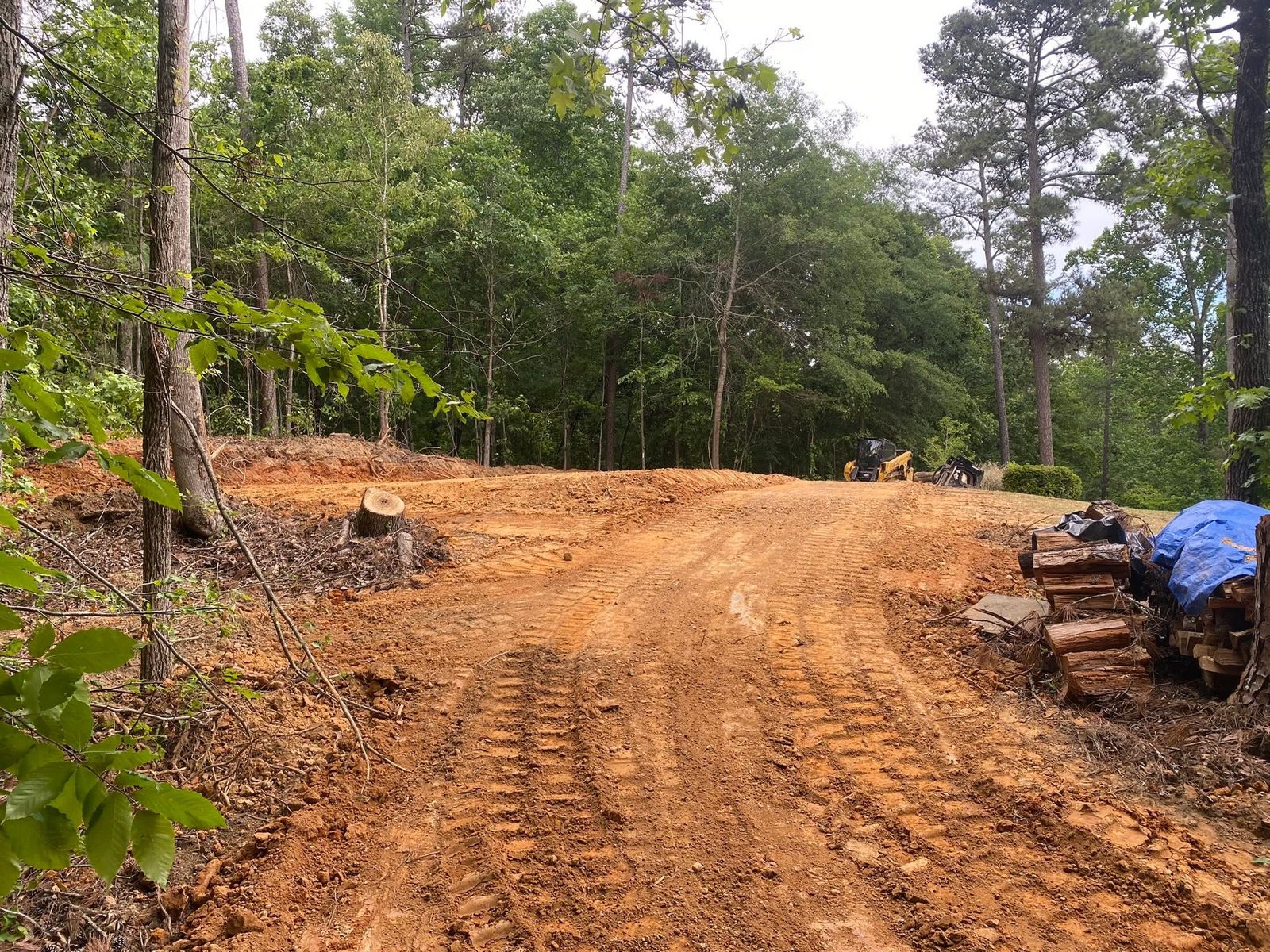
A utility trench is a narrow cut with a flat floor and a consistent depth, dug so a water line, an electrical conduit, or a low-voltage run has somewhere to sit. It sounds simple right up until you are the one doing it by hand across a long stretch of Northwest Georgia clay with roots and rock in the way. On an excavator it is a controlled cut with the spoil windrowed along one side, out of the way and easy to put back.
What matters after the machine leaves is what went back in the hole. Clay dumped back in loose keeps settling for a season or two and leaves a sunken line running across the yard or pasture, and every rain finds it. Material goes back in lifts and gets tamped as it goes, so the ground over the run ends up level with everything around it and stays there.
We Dig It. Your Electrician or Plumber Connects It.
This is excavation work. We open the trench, bed it, and backfill it. We do not make electrical connections, we do not tie into a panel, and we do not do plumbing hookups. That is a separate trade and it should be, and you should hear that on the phone rather than halfway through the job.
In practice it runs clean. You line up your electrician or plumber, they tell us the depth, width, and route they want, and we dig it. They set their pipe, wire, or conduit in the trench. We come back and close it. The pipe and conduit are usually theirs to supply, since they are the ones making the connections and they know what they want to work with.
Being clear about that line is a strength, not a gap. You get a machine and an operator for the part that needs a machine, and your trade spends their hours on the part that needs their hands, instead of paying somebody to dig the whole run by hand or renting equipment to do it themselves.
Locates Get Called and Marked Before the Machine Digs
There is almost always something already in the ground out there. A water service from the road, a power drop, a gas line, a septic line, an old irrigation run somebody put in and never mapped. In Georgia the way you find out where those sit is a utility locate through 811. The call is free, and the utilities send someone out to mark what they own with paint and flags.
So locates get called in and marked before the bucket goes in the ground, and then we work off those marks: stay clear where we can, dig by hand where the paint says a line is close. It is the practical way to keep a one-day trench from turning into a cut line, a repair, and a house with no water until somebody gets there.
One thing worth knowing. A locate covers the lines the utilities own, generally out to your meter. Anything you or a previous owner ran past that point, out to a shop, a barn, a well pump, or a gate opener, usually is not on anybody's map. If you know where those runs are, walk them with us. If you do not, we go slower through the likely ground.
Depth, Bedding, and Closing It Back Up
How deep a trench goes depends on what is going in it and who is connecting it. A water line has to sit deep enough that a hard freeze cannot reach it. A power run is a different depth than a low-voltage line out to a gate opener or a yard light. The person making the connections works to a depth they are comfortable with, so we ask them for a number and dig to it instead of guessing at it.
What the line sits on matters too. Setting pipe or conduit straight down on a floor of rock and clay chunks puts pressure in exactly the spots you do not want it. Where the run calls for it, we bed the trench floor with sand or screened material and cover the line with the same before the rest of the backfill goes in.
Then it gets closed properly. Backfill in lifts, tamped as it goes, so the trench line does not become a trough that catches water and carries it somewhere you did not want it going. Across a yard we finish grade the strip so it blends back in. Across a pasture it needs to end up even enough to mow and drive over.
Long Runs Out to a Barn, Shop, or Well
Trenching on acreage usually has the same shape. The meter or the house is here, and the thing that needs water or power is way over there. A shop going up behind the house. A barn that has never had a light in it. A well and pump on the far side of a pasture. A homesite for family on the back of the property. A gate at the road with no power to it.
Distance is the easy part with a machine on site. The part that takes thought is the route: staying off the septic field, picking where to cross the drive, working around the trees you want to keep, and reading the fall of the ground so the trench does not become the path water takes next time it rains. We walk the run with you and settle the route before anything gets dug.
Where the line crosses a gravel drive, we cut through it, get the run across, and put the base and gravel back so the crossing holds under a truck instead of settling into a dip. If the route has to cross concrete or asphalt, that is a bigger piece of work, and we will tell you what it involves before we start rather than after.
Where this work comes up
Trenching is acreage work more than town work. Armuchee and Silver Creek are full of places where the barn, the shop, or the well pump sits a long way from the meter, and that distance is the whole job.
Same machine, different pipe. Read more on how a french drain gets trenched, bedded, and backfilled.
Every job starts with a free, honest on-site estimate. Call (706) 936-4615 and tell us about your property.
What you are left with
- An open trench at the depth and route your electrician or plumber asked for
- Existing utilities located and marked before the machine ever digs
- The line bedded and backfilled in lifts instead of dumped back in loose
- Water or power reaching the barn, shop, well, or homesite that never had it
Frequently Asked Questions
It depends on what is going in it and who is connecting it. A water line needs to sit deep enough that a hard freeze cannot reach it. A power run and a low-voltage run out to a gate or a yard light are different again. The person making the connections at the ends works to a depth they are comfortable with, so give us their number, or put us in touch with them, and we dig to it instead of guessing.
Locates get called in to 811 before the machine digs. It is free, and the utilities come mark what they own with paint and flags so we know what is down there, stay clear of it, and dig by hand where a line is close. Worth knowing: a locate covers utility-owned lines, generally out to the meter. Private runs somebody added later, out to a barn or a well pump, usually are not on any map, so anything you can tell us about those helps.
No. We are an excavation outfit, not an electrical or plumbing one. We dig the trench, bed it, and backfill it. Your electrician makes the electrical connections and your plumber handles the water side. That is the honest split, and it is better to hear it now than on the day of the job.
Yes. On a gravel drive we cut through, get the line across, and put the base and gravel back so the crossing holds under traffic instead of settling into a dip. Concrete and asphalt are a heavier job, since something has to be cut or broken out and then replaced, and we will walk you through what that means for your drive before anything starts.
Usually, yes. We dig the run, your trade sets their pipe, wire, or conduit in it, and we come back to bed and backfill once the line is in. It takes one phone call to line those two visits up, and it is worth making, because an open trench is not something you want sitting across the yard any longer than it has to.
Related Reading
Straight answers from the blog
French Drain Installation Guide
Learn how to install a French drain in Georgia red clay: proper slope, gravel, filter fabric, and drainage that actually works long term.
Driveway Culvert Guide
Water pooling or washing out at your driveway? Learn the signs you need a driveway culvert, how sizing works, and what installation costs in Georgia.
Yard Drainage Solutions
Standing water in your yard has a cause and a fix. Here is why Northwest Georgia yards hold water, the range of drainage fixes, and when to call a contractor.
How to Level a Yard
A bumpy lawn and a yard that holds water need very different fixes. Here is how to level a yard, when to topdress it yourself, and when it is a grading job.
More From Legacy
Other ways we improve your land
Brush Cutting & Land Clearing
Full land clearing for lots, acreage, and fence rows: underbrush cleared, stumps addressed, ground left build-ready or pasture-ready.
Forestry Mulching
Brush and small trees ground into mulch where they stand, on a dedicated CAT mulcher head the owner runs himself.
Fence Line Clearing
Reclaim overgrown fence rows and property lines. We mulch privet, briars, and saplings in place so the line is visible and open again.
Grading & Site Prep
Land grading contractors for building pads, driveways, and drainage: proper cut, fill, slope, and compaction on every job we grade.
Drainage Correction
Stop standing water, erosion, and washouts with french drains, swales, and grading built for Georgia clay and Georgia rain.
Driveways & Access
Gravel driveway installation and repair, access roads to back acreage, and culverts sized to keep water off your drive.
Recreational Land
Food plots, hunting trails, ATV paths, shooting lanes, and view cuts. We shape recreational land so you can actually use it.
Property Restoration
Overgrown today, restored tomorrow. We bring neglected land, lots, and pastures back to clean, maintained, usable shape.
Excavation & Dirt Work
Dirt work is our bread and butter: digging, fill, stumps, hauling, and the heavy shaping that makes every other project possible.
Bush Hogging
Maintenance mowing for rough ground: pastures, hay fields, trails, roadsides, and vacant lots cut down with a rotary cutter.
Demolition & Removal
Old sheds, barns, mobile homes, slabs, and pens taken down, loaded out, and hauled off, with the ground left clean and level.
Yard Leveling
Bumpy, rutted, or holding water? We cut the highs, fill the lows, and set fall away from the house so the yard drains and mows clean.
· 27 reviews on Google · Powered by Google
Chris Fedderson
“Just 10 days after having met John he was in my yard with dirt and machinery, and those days included waiting on the weather some. John did a fantastic job; better than I had envisioned. I definitely WILL have him back for any future projects. ... now, if I could just get him to pull weeds.”
Maria Spohn
“We recently hired Legacy Land Care LLC for an erosion issue, 1/4 of property washed away, we also had drainage issues, and we couldn't be happier with the results! ... The crew was incredibly professional, arrived on time, and respected our home by cleaning up at the end of every workday.”
Get Your Free Estimate Today!
Tell us about your land and what you are trying to get done. We will get right back to you, usually the same day.
Your information stays private. No spam, no pressure, no obligation.